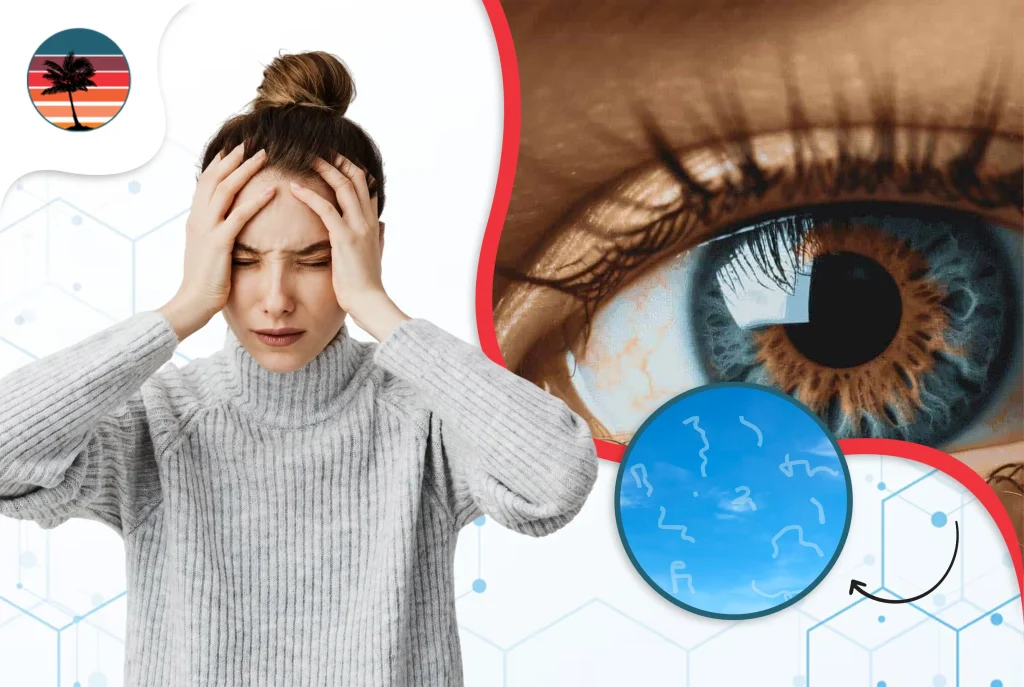
People who experience flashes and eye floaters are often concerned about the reasons and effects of their symptoms. Stress is common, and it promotes its formation.
Floaters are small shapes that drift across the vision. Flashes are brief streaks of light, often appearing in the peripheral vision. These occur when the vitreous pulls on the retina.
This article analyzes the distinctive features of flashes and floaters, their causes, and any possible connections to stress.
Understanding Eye Flashes and Floaters
Eye flashes and floaters are common occurrences. Floaters are specks, cobwebs, or thread-like structures that drift across the vision. They appear as tiny clumps of gel or cells inside the vitreous fill the eye.
Flashes are streaks or flickers in peripheral vision. When the vitreous tugs on the retina, it mechanically stimulates it, causing the sensation. This occurs during a posterior vitreous detachment (PVD), typically after age 50.
Occasional floaters and flashes are harmless. An increase in curtain-like shadow or vision loss indicates a retinal tear. Immediate medical assistance is required in this case.
Regular eye exams can track these changes and rule out any underlying disorder. Always visit an eye care specialist when in doubt.
Common Causes of Floaters and Flashes
Several factors contribute to the occurrence of floaters and flashes:
- Aging: As we age, the vitreous humor undergoes changes, leading to floaters.
- Posterior Vitreous Detachment (PVD): This condition arises when the vitreous separates from the retina, resulting in both floaters and flashes.
- Retinal Tears or Detachment: When the retina tears or detaches, it can lead to a sudden increase in floaters and flashes, which can risk vision.
- Eye Injuries or Surgeries: Trauma or surgical procedures introduce changes in the vitreous, leading to floaters. Surgeries like cataract surgery to get rid of floaters can sometimes contribute
- Certain Medical Conditions: Diseases like diabetes affect retinal health and cause visual disturbances.
The Connection between Stress and Eye Floaters
Stress is known to impact our overall health. However, how it causes eye floaters remains unclear. According to Associated Retina Consultants, stress alone is not responsible for eye floaters. They are primarily caused by the deterioration of the vitreous humor associated with aging.
However, stress may aggravate the perception of floaters. Under stress, individuals become more aware of the floaters, leading to increased concern.
Beyond the nuanced possibilities, other suggestions highlight these –
- Stress increases cortisol levels, which impacts blood vessels, tissue health, and the eye. It inflames the vitreous gel and worsens the condition.
- Stress activates the Sympathetic Nervous System and impacts the retina and optic nerve micro-circulation.
- Stress coinciding with lack of sleep, prolonged exposure to screens and lights, and fatigue causes floaters.
Anxiety and Eye Flashes: Is There a Link?
Based on a study, individuals experiencing eye flashes have higher levels of anxiety and stress. Whether anxiety leads to flashes is uncertain.
Stress and anxiety might not directly cause flashes. They can heighten the awareness of visual disturbances, thus, making them more noticeable and critical.
When to Consult an Eye Doctor?
Some occasional floaters and flashes can be benign. However, specific symptoms demand prompt attention from a professional. Here is when to see an eye doctor –
- A sudden increase in the number of floaters
- Frequent flashes of light
- A shadow or curtain obscuring the vision
- Loss of peripheral vision
These signs indicate severe conditions like a retinal tear or detachment. Therefore, they require immediate intervention.
Managing Stress to Support Eye Health
Managing stress is beneficial for overall well-being, including eye health. Consider the following strategies –
- Relaxation Techniques: Engage in deep breathing, meditation, or yoga to alleviate stress.
- Regular Exercise: Physical activities reduce stress and promote overall health.
- Adequate Sleep: Sufficient rest helps the body manage stress effectively and restore well-being.
- Healthy Diet: A balanced diet supports overall health, including eyes.
Incorporating these practices can help manage stress levels and may reduce the perceived impact of floaters and flashes.
Conclusion
Stress and anxiety do not directly cause eye floaters and flashes. They, however, influence how we perceive visual disturbances.
Understanding the common causes of floaters and flashes is crucial. If you experience sudden changes in your vision, consult with an eye care professional to rule out serious conditions.
Managing stress through healthy lifestyle choices can support overall well-being. Quality living can potentially reduce the impact of these visual symptoms.
Frequently Asked Questions
1. What causes eye floaters?
The reason why eye floaters happen is mostly because of aging and the change of the vitreous gel found in the eye. Other possible causes of eye floaters are retinal tears and retinal conditions.
2. When should I see a retina specialist for floaters or flashes?
You should go to a retina specialist right away if you experience an increased number of floaters, flashing lights, a dark shadow like a curtain falling across your eye, or any loss of vision.
3. Can stress make existing eye floaters more noticeable?
Dealing with stress can help you manage your awareness of existing floaters and also improve eye health. However, it won’t do away with floaters brought about by vitreous changes or retinal problems.
4. Can reducing stress help improve eye floaters?
Stress management might assist in decreasing your perception of the present floaters and promoting good eyesight, but it is not going to cure your problem of the floaters created due to vitreous changes or retinal disease.