Macular hole surgery successfully closes the hole in about 90% of patients if recovery protocols are followed. The surgery usually takes about an hour and is done on an outpatient basis. Still, Macualr hole surgery recovery can take many weeks of careful and dedicated care. Knowing what to expect will help you prepare both physically and mentally for the healing process.
Your Recovery Timeline Explained
Usually, after macular hole repair, vision improves slowly over many months. The gas bubble resolves gradually, and the retina may take several more months to recover fully.
Here’s the general timeline you can expect:
- First few days: The gas bubble holds the macula in place while healing starts.
- 2–8 weeks: The bubble gradually dissipates and is absorbed by the eye.
- First 3 months: The most noticeable gains in vision appear.
- 3–12 months: Vision continues to refine and reaches its maximum recovery.
The extent of vision improvement depends on factors such as how long the hole existed before surgery, its size and stage, and whether other eye conditions are present, including cataracts. Most patients achieve excellent results, while others experience more modest improvements.
Face-Down Positioning Is Critical
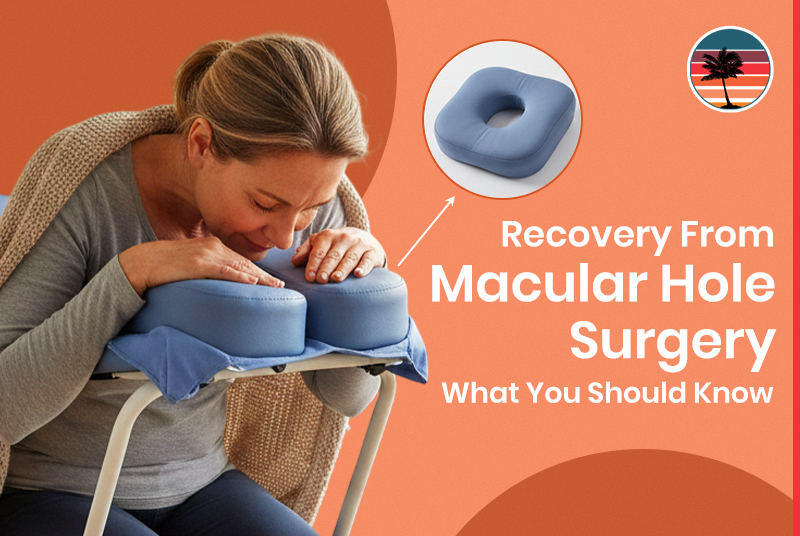
The key to a successful recovery from this surgery is in how you position your head. You will maintain a face-down posture to keep the gas bubble pushing against your macula, providing optimal conditions for the hole to seal.
Your retina surgeon will detail a positioning regimen for you, which may involve face-down positioning for 1 to 7 days. The initial 72 hours are particularly critical; strict compliance during this time is strongly correlated with the approximate 90% success rate.
Avoid lying flat on your back during the positioning window, as this position allows fluid to seep into the healing hole and can jeopardize the surgical outcome.
Consider investing in positioning aids such as face-down recovery chairs, adapted massage-table setups, or special pillows. Although the routine is uncomfortable, this temporary effort significantly increases the chance of successful hole closure.
Use Your Medications Correctly
Post-surgical eye drops help prevent infection and reduce inflammation while your eye heals. These medications are taken for several weeks on a particular daily regimen.
Set phone reminders to avoid missing a dose, as skipped medication can lead to complications that may jeopardize your surgical outcome.
Immediately after surgery, your eye will be patched, and mild discomfort is common. This usually resolves within days.
Strict Travel Restrictions
Do not fly or go to high elevations because the gas bubble in your eye will expand and could cause permanent vision damage in your eye with changes in pressure.
Scuba diving is also not allowed during this period. The bubble usually takes about 2–8 weeks to get fully absorbed, so plan accordingly. Always inform medical personnel—particularly anesthesiologists—that you have a gas bubble in your eye if you require any medical procedures while recovering.
Limit Physical Strain
It is essential to protect your eye in the early weeks after surgery for a macular hole. While your eye is healing, avoid activities that could increase eye pressure or lead to injury.
Avoid the following until your doctor tells you it is okay:
- Heavy lifting and strenuous workouts
- High-impact sports where the head is jolted repeatedly
- Bending or straining repeatedly
- Activities that include fast head movements
Gentle walking, on the other hand, is usually safe and can support your general health as you recover.
Keep Every Follow-Up Appointment
Your retina specialist will schedule regular follow-up visits to monitor your healing. These appointments show whether the macular hole is closing, how the gas bubble is being absorbed, and whether there are any gains in your vision.
Most macular holes begin to close within the first 24 hours following surgery. Your doctor will confirm this progress and spot potential complications early, when treatment is easiest.
Do not miss appointments, even if your vision seems to be improving.
Understand Realistic Vision Outcomes
Recovery from macular hole surgery is gradual and takes many months. You may first notice that it is easier to read or that you can recognize faces more clearly. Still, some distortion or blurring usually persists initially.
Studies indicate that the inner retinal layers usually heal within a month, while the deeper layers take 3 months or longer. In some patients, complete visual improvement can continue for up to a year.
Vision might not return to the pre-hole level if the hole has been present for a long time before treatment. Still, most patients regain functional central vision that significantly enhances their quality of life.
Recognize Warning Signs
Contact your retina specialist immediately if you are experiencing any of the following:
- Sudden loss of vision or significant visual changes
- Severe or increasing eye pain
- Redness, swelling, or discharge that is getting worse
- New floaters or flashes of light
These signs may indicate serious complications that require urgent care.
Prepare for Potential Cataract Formation
If you have never had cataract surgery, be prepared for the possibility of cataract development over the months following your macular hole repair. Cataract development is a common consequence following vitrectomy surgery. Ongoing follow-up often helps your doctor detect early changes that may require treatment.
Exercise Patience During Healing
Vision improvements continue through the first year following macular hole surgery. Many patients realize their most significant improvement after the gas bubble has dissipated completely—typically about 4 to 8 weeks—but refinement often continues for months afterward.
Most people are back to normal daily activities by the second or third month. Continue following all activity restrictions and medication schedules until your retina specialist clears you.
Learn More About Macular Holes
Understanding your condition is the best way to take care of your eyes. Our macular hole resource page provides comprehensive information on symptoms, causes, diagnosis, and treatment options. The best outcomes in preserving central vision result from early detection and prompt treatment.
Retina Vitreous Associates of Florida—Guiding Your Path to Clearer Vision.
Your recovery from a macular hole depends mainly on your face-down positioning as instructed and following your specialist’s instructions to the letter. While recovery can be challenging, modern surgical techniques promise excellent results for the majority of patients.
At Retina Vitreous Associates of Florida, our board-certified retina specialists bring more than 54 years of combined experience in treating macular holes and guiding you through recovery. Individualized care at every level, from initial diagnosis through complete healing.
Schedule your consultation today. Visit our website or call to discuss your concerns about a macular hole with an experienced retina specialist.
Frequently Asked Questions
1. What should I expect after macular hole surgery?
The symptoms following macular hole surgery include blurred vision, mild irritation, and a bubble of gas in the eye. Retinal specialists may require you to lie on your face and take specific eye drops post-operation.
2. How long does it take to regain vision after macular hole surgery?
There is typically gradual improvement in vision over weeks and months as healing occurs and the gas bubble goes away. This improvement depends on how large the hole is and for how long it existed, along with the condition of your retina.
3. How painful is macular hole surgery?
The macular hole operation does not cause any pain since the eyes are numb throughout the process. However, irritation or scratching may occur after the process and will resolve in a few days.
4. Can I fly or travel to high altitudes after macular hole surgery?
No. If a bubble of gas was inserted into your eye during surgery, you should not travel by air or go up in altitude until the retina specialist determines that all traces of the bubble have vanished.