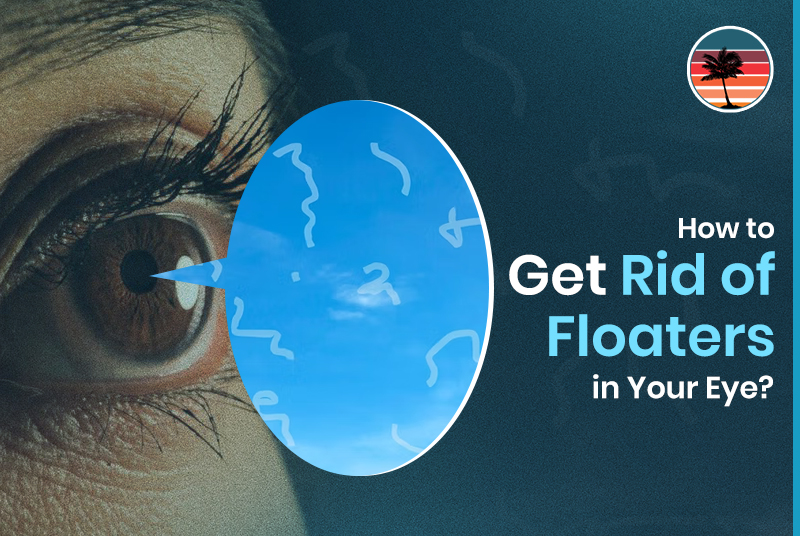
If you’re wondering how to get rid of eye floaters, you are not alone. Eye floaters are those pesky spots, threads, or cobweb-like shapes that drift across your vision, most commonly against a bright background such as a clear sky or a white wall.
Most floaters are not severe and tend to fade with time. Still, chronic ones can be distracting and interfere with reading, driving, and other everyday activities. By understanding eye floaters treatment options, you can decide when professional care may be needed and which solutions may work for your situation.
What Causes Eye Floaters?
Floaters arise when small clumps form in the clear gel that fills the inside of your eye, called the vitreous. The gel becomes more liquid as we age and sometimes pulls away from the back of the eye, a normal, usually harmless, process called posterior vitreous detachment (PVD). This pulling causes the shadows you see as floaters in your vision.
Other causes of floaters are inflammation of the eye, bleeding within the eye, and certain medical conditions. Most floaters are a regular part of aging. Still, some might indicate serious problems, most particularly, a sudden increase in the number of floaters or an onset accompanied by flashes of light. For more information about posterior vitreous detachment and its symptoms, see our PVD resource page.
Do Eye Floaters Go Naturally?
When patients ask how to reduce eye floaters without treatment, the truth is that some floaters do become less noticeable with time. Often, the brain will learn to ignore them, or they drift out of your direct line of vision. The course usually recommended for those with mild floaters that don’t significantly affect vision is observation without intervention.
But some floaters persist and continue to impair vision; thus, treatment becomes essential. Some medical treatments will be effective if the floaters disturb comfort in performing everyday tasks.
Vitrectomy: Surgical Solution for Severe Floaters
For those struggling with very bothersome floaters and demanding to know how to get rid of eye floaters completely, vitrectomy is the most definitive. This surgical process involves extracting the vitreous gel and the embedded floaters through tiny eye incisions.
Then, the vitreous cavity is filled with a clear saline or silicone solution to maintain the eye’s shape. Eventually, your body starts producing new vitreous fluid.
Vitrectomy is done on an outpatient basis with local anesthesia and takes about one hour to complete. Afterwards, the eye is covered with antibiotic ointment and a healing patch. Improvement of vision can take some weeks as the eye heals.
This is quite an effective way to remove floaters completely, but it carries greater risks than laser treatment. Potential complications include retinal tears or detachment, internal bleeding, infection, increased intraocular pressure, and cataract development in people who retain their natural lens.
Because of these risks, vitrectomy for floaters is generally reserved for severe cases in which floaters seriously disrupt daily life and overall functioning.
Lifestyle Approaches and Eye Health
None of the home remedies claimed to remove floaters is scientifically supported. Still, the same general eye health support helps one adapt to them with more comfort. Staying well-hydrated helps keep the vitreous gel in good condition.
A nutrient-rich diet, rich in colorful fruits and vegetables, provides antioxidants that support the retina’s health. Wearing sunglasses with 100% UV protection protects the eyes from possible damage, and taking screen breaks can reduce eye strain.
Some recommend eating pineapple or taking certain supplements. Still, these methods have not been scientifically proven to eliminate floaters. They should not replace a professional medical consultation. Consult a retina specialist for evidence-based options if floaters get in your way.
When Floaters Signal a Medical Emergency?
While most floaters are harmless, some may indicate a serious condition and require urgent consultation with an eye doctor. If you experience any sudden increase in the number of floaters, new flashes of light, a dark curtain or shadow crossing your field of vision, or a sudden loss of vision, call a retina specialist immediately.
These symptoms can indicate a retinal tear or detachment. This true medical emergency requires early treatment to prevent permanent vision loss. Early detection and timely intervention provide the best opportunity to preserve your sight when serious retinal problems occur.
Choosing Your Best Treatment Option
The best way to address eye floaters depends on the severity, their sitting position, and how much they hamper daily life. If the floaters are mild and not very bothersome, the safest course is usually to watch and wait without treatment. More bothersome floaters that interfere with your activities warrant consideration of less invasive laser vitreolysis, with solid success rates and lower risks than surgical alternatives.
In more severe cases, when floaters severely diminish vision and quality of life, a vitrectomy may offer the most complete relief. However, it is associated with a higher risk. An experienced retina specialist will evaluate your case with a proper dilated eye examination, will present to you the benefits and risks of each option, and select the most appropriate treatment for you.
Retina Vitreous Associates of Florida—Where Expertise Meets Healing.
Treating eye floaters is based on determining their cause and severity through a professional evaluation.
While most floaters soften or fade over time, there are effective options, like vitrectomy, for cases where floaters noticeably disrupt vision and daily life.
Our board-certified retina specialists at Retina Vitreous Associates of Florida have diagnosed and treated patients with vitreous floaters and related retinal conditions for more than 54 years. We offer thorough evaluations and personalized treatment plans that address your special needs and concerns.
Please schedule your appointment today by visiting our website or calling us to discuss your floater concerns with an experienced retina specialist who can determine the best approach for achieving clearer, more comfortable vision.
Frequently Asked Questions
1. Can You Get Rid of Eye Floaters Naturally?
Some floaters become less noticeable over time as the brain adapts to them. However, there is no proven natural remedy that completely removes eye floaters.
2. What Is the Main Cause of Eye Floaters?
Eye floaters are commonly caused by age-related changes in the vitreous gel inside the eye, including posterior vitreous detachment (PVD).
3. What Treatments Can Remove Eye Floaters?
Treatment options include observation, laser vitreolysis, and vitrectomy, depending on the severity of the floaters and their effect on vision.
4. When Should I See an Eye Doctor for Eye Floaters?
See an eye doctor promptly if you suddenly develop many new floaters, flashes of light, a curtain or shadow in your vision, or sudden vision loss.
5. Can Laser Treatment Get Rid of Eye Floaters?
Laser vitreolysis can reduce or break up certain bothersome floaters. A retina specialist can determine whether you are a suitable candidate.
6. Is Surgery an Option for Severe Eye Floaters?
Yes. Vitrectomy may be considered for severe floaters that significantly interfere with vision and daily activities.