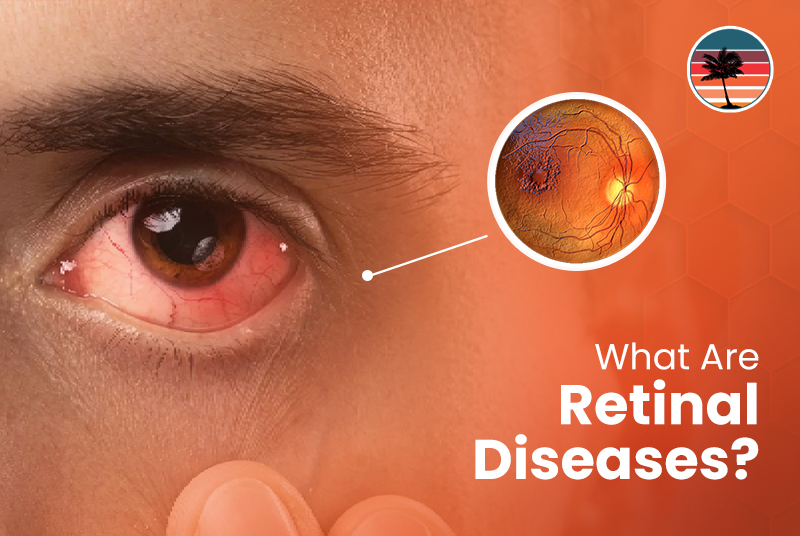
A flash of light in the corner of your eye. A sudden cloud of floaters. A shadow creeping across your vision. If you’re reading this, something already feels wrong, and you want a straight answer.
Retinal diseases are a leading cause of permanent vision loss in the U.S. Yet, most people miss the warning signs until it’s too late. Your retina has no pain receptors, so damage can build silently for months before you notice a thing.
This guide breaks down every major retinal disease, what triggers it, and how to catch it before it steals your sight. Keep reading. The next few minutes could save your vision.
Quick Answer
Retinal diseases are eye conditions that damage the retina, the light-sensing tissue at the back of your eye. Common types include diabetic retinopathy, retinal detachment, macular degeneration, and retinitis pigmentosa. Symptoms include blurry vision, floaters, flashes of light, and dark spots. Early treatment can save your vision, so you should see an eye doctor if symptoms appear.
Key Takeaways
• Retinal diseases damage the light-sensing tissue at the back of your eye.
• Diabetes, aging, and genetics are the main causes.
• Common types include diabetic retinopathy, AMD, and retinal detachment.
• Sudden floaters, flashes, or a shadow in your vision need urgent care.
• Regular eye exams catch problems before you notice symptoms.
How Does Your Retina Work?
Before you can spot a problem, it helps to know what your retina actually does. Here’s how it turns light into the pictures you see every day.
Light enters your eye through your cornea. It passes through your pupil and lens. Your lens focuses the light onto your retina. Your retina then converts that light into electrical signals. Your optic nerve carries these signals to your brain. Your brain turns the signals into the images you see.
Your macula sits at the center of your retina. It controls your sharp, detailed vision. This is the part you use to read, drive, and recognize faces. Damage to your macula often causes the most noticeable vision loss.
What Causes Retinal Diseases?
Not every retinal disease starts the same way. Your risk usually comes down to one of three factors.
Doctors group the causes into three main categories.
• Aging: Your retina wears down over time. This raises your risk of macular degeneration and retinal tears.
• Disease: Conditions like diabetes and high blood pressure damage the small blood vessels in your retina. This leads to diabetic retinopathy and retinal vein occlusion.
• Genetics: Some retinal diseases run in families. Retinitis pigmentosa and Stargardt disease are inherited conditions. You can develop symptoms in childhood or later in life.
Other causes include eye injuries, infections, and extreme nearsightedness.
Common Types of Retinal Diseases
Retinal disease isn’t one condition. It’s a family of them, and each one behaves differently. Here are the ones you’re most likely to encounter.
1. Diabetic Retinopathy
Diabetic retinopathy happens when high blood sugar damages the blood vessels in your retina. These vessels can leak fluid or bleed. Over time, this causes blurry vision and, in severe cases, blindness. It is the leading cause of vision loss in working-age adults in the United States.
2. Age-Related Macular Degeneration (AMD)
AMD damages your macula as you age. It comes in two forms. Dry AMD progresses slowly and causes gradual blurring. Wet AMD progresses fast because abnormal blood vessels grow under your retina and leak fluid. AMD is a leading cause of vision loss in adults over 60.
3. Retinal Detachment
Retinal detachment occurs when your retina pulls away from the back of your eye. This is a medical emergency. Without prompt treatment, you can permanently lose vision in the affected eye. Warning signs include sudden floaters, flashes of light, or a shadow across your vision.
4. Retinal Tears and Holes
A retinal tear happens when the gel inside your eye pulls on your retina hard enough to rip it. If you don’t treat a tear, fluid can seep behind your retina and cause a full detachment.
5. Retinal Vein Occlusion
This happens when a blood clot blocks a retinal vein. Blood and fluid build up, which damages your vision. It often affects people with high blood pressure, diabetes, or high cholesterol.
6. Macular Hole and Macular Pucker
A macular hole forms when tissue at your macula develops a small break. A macular pucker happens when scar tissue forms on your macula and wrinkles it. Both conditions blur or distort your central vision.
7. Retinitis Pigmentosa
This is a group of inherited disorders. It slowly destroys the light-sensing cells in your retina. Early signs include trouble seeing at night and losing side vision. It usually starts in childhood.
8. Central Serous Retinopathy
Fluid builds up under your retina in this condition. It causes blurred or distorted vision, often in one eye. Stress and steroid use are common triggers.
Symptoms of Retinal Disease
Many of these conditions look different under a microscope but feel similar from the inside. Watch for these signs.
Call your eye doctor right away if you notice:
• Blurry or distorted vision
• New floaters (specks that drift across your sight)
• Flashes of light
• A dark curtain or shadow in your vision
• Trouble seeing at night
• Loss of side (peripheral) vision
• Straight lines that look wavy
Sudden symptoms need urgent care. A retinal detachment can cause permanent blindness within hours if left untreated.
How Doctors Diagnose Retinal Diseases?
Catching retinal disease early starts with the right exam. Here’s what that visit usually involves.
Your eye doctor starts with a dilated eye exam. They use drops to widen your pupils, then check your retina with a bright light. If they suspect a problem, they may order more tests:
• Optical coherence tomography (OCT) creates a detailed cross-section image of your retina.
• Fluorescein angiography uses a dye and camera to track blood flow in your retina.
• Fundus photography takes a wide photo of your retina to track changes over time.
• Visual field testing checks how well you see at the edges of your vision.
How Do Doctors Treat Retinal Diseases?
The right treatment depends on your exact diagnosis. Your retina specialist may recommend one option or a combination of the following.
• Anti-VEGF injections: Doctors inject medicine into your eye to stop abnormal blood vessels from growing and leaking. This treats wet AMD and diabetic retinopathy.
• Laser therapy: A laser can seal retinal tears, shrink abnormal blood vessels, or stop fluid leaks.
• Vitrectomy: Surgeons remove the gel inside your eye to repair a detachment, macular hole, or pucker.
• Scleral buckle surgery: Doctors attach a small band around your eye to push its wall closer to your detached retina.
• Photodynamic therapy: Doctors use a light-activated drug to close abnormal blood vessels.
• Low vision aids: For conditions without a cure, like retinitis pigmentosa, tools such as magnifiers and mobility training help you adapt.
Your treatment plan may combine several of these options.
Can You Prevent Retinal Diseases?
You can’t control your genes, but you can control a lot more than you think. These habits lower your risk.
• Get a dilated eye exam every one to two years, or as your doctor recommends.
• Manage your blood sugar if you have diabetes.
• Keep your blood pressure and cholesterol in a healthy range.
• Quit smoking. Smoking doubles your risk of AMD.
• Wear protective eyewear during sports or risky activities.
• Eat leafy greens and omega-3-rich fish to support eye health.
• Know your family history, since many retinal conditions are genetic.
When to See a Doctor?
Some symptoms can wait for your next checkup. Others can’t wait an hour.
See an eye doctor right away if you notice sudden floaters, flashes of light, or a shadow in your vision. These signs can mean a retinal detachment, which needs treatment within hours to save your sight. Book a routine exam every year if you have diabetes, high blood pressure, or a family history of retinal disease.
Retina Vitreous Associates of Florida — Quality. Compassion. Trust. Your Vision, Our Focus.
Retinal disease moves fast. So can you.
The sooner you act on blurry vision, floaters, or flashes, the more of your sight you protect. Waiting is the one thing your retina can’t afford.
Retina Vitreous Associates of Florida has protected Tampa Bay families’ vision since 1971. Our board-certified, fellowship-trained retina specialists use advanced diagnostics and the latest treatments across seven Florida locations.
Don’t wait for a shadow to become permanent. Request an appointment with RVAF today for a clear answer and a clear path forward.
Frequently Asked Questions
1. What is the most common retinal disease?
Diabetic retinopathy and age-related macular degeneration are the most common retinal diseases in the U.S. Diabetic retinopathy affects adults with diabetes. AMD affects adults over 60. Both damage central vision but respond well to early treatment.
2. Can retinal disease be reversed?
Some retinal diseases, like diabetic retinopathy and wet AMD, respond well to treatment and can stop progressing. Others, like retinitis pigmentosa, have no cure yet. Early diagnosis gives you the best chance to protect your remaining vision.
3. Is retinal disease the same as glaucoma?
No. Retinal disease damages the retina itself, while glaucoma damages the optic nerve, usually from high eye pressure. Both can cause vision loss, but they need different tests, specialists, and treatment plans.
4. How fast can retinal detachment cause blindness?
A full retinal detachment can cause permanent blindness within days if untreated. Surgery within 24 to 48 hours of symptoms gives you the best chance of saving your vision, so treat it as a medical emergency.
5. Can children get retinal diseases?
Yes. Inherited conditions like retinitis pigmentosa and Stargardt disease often appear in childhood. Premature infants can also develop retinopathy of prematurity, which needs early screening to prevent lasting vision loss.
6. What are the early warning signs of retinal disease?
Early signs include blurry vision, new floaters, flashes of light, wavy straight lines, and a dark shadow in your side vision. See an eye doctor promptly if any of these appear suddenly.