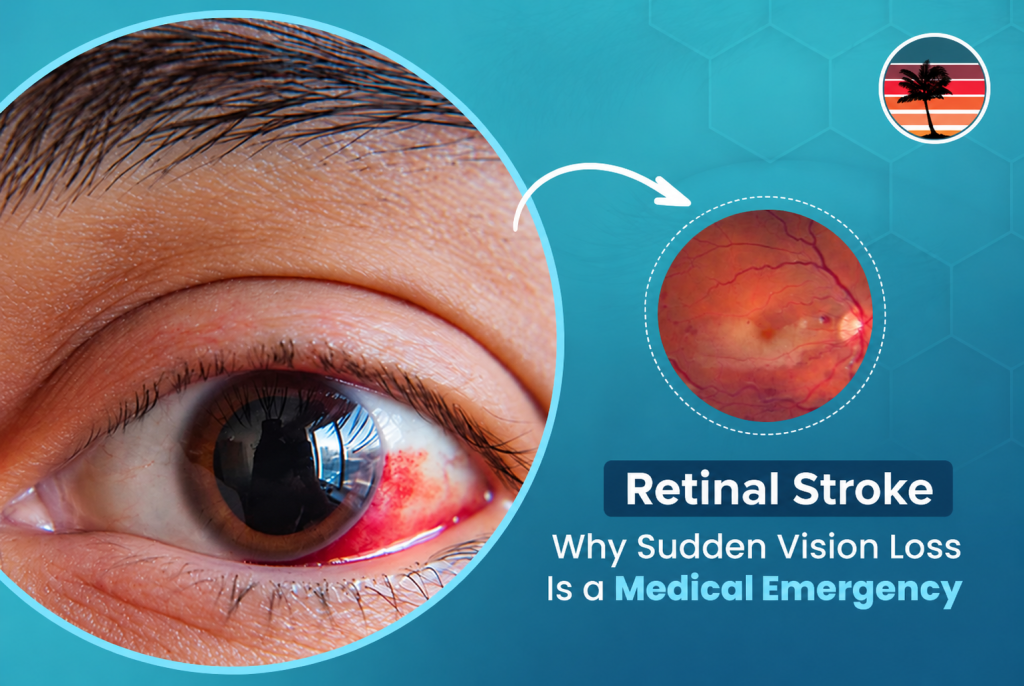
What Is a Retinal Stroke?
A retinal stroke happens when blood flow to the retina is blocked. The retina is the light-sensitive tissue at the back of the eye and an extension of the brain. When blood stops flowing, retinal cells begin to die.
The American Heart Association and American Stroke Association include the retina in their definition of stroke. Doctors call this condition retinal artery occlusion. Because the cause is the same as in a brain stroke, a retinal stroke is a warning sign for the brain and heart.
Types of Retinal Stroke
The type depends on where the blockage occurs.
- Central retinal artery occlusion (CRAO): Blocks the main artery to the retina. It is the most severe form and usually causes sudden, painless, major vision loss in one eye.
- Branch retinal artery occlusion (BRAO): Blocks a smaller branch. You may lose only part of your visual field and might not notice it right away.
- Transient monocular vision loss (TMVL): A temporary episode of vision loss that clears on its own. It is like a “mini-stroke” (transient ischemic attack, or TIA) of the eye and still needs urgent evaluation.
Retinal Stroke Symptoms
The hallmark symptom is sudden, painless vision loss in one eye. You may notice:
- A curtain or shadow over part of your vision
- Blurry vision or a dark area in your field of view
- Blind spots or missing sections of sight
- Vision that goes dark for a few minutes and then returns
Do not ignore a brief episode. It may mean a clot has passed through, and a larger blockage could follow.
What Causes a Retinal Stroke?
Most retinal strokes come from a blockage in the retinal artery.
- Embolus: A clot or piece of plaque travels through the bloodstream and lodges in a retinal vessel. It may come from the carotid artery in the neck or from the heart.
- Thrombosis: A clot forms directly inside the retinal artery.
- Giant cell arteritis: A less common cause. This inflammation of blood vessels mostly affects people over 50 and needs urgent steroid treatment to protect vision in both eyes.
Risk factors are similar to those for brain stroke: high blood pressure, diabetes, high cholesterol, smoking, heart disease, and carotid artery narrowing. Risk rises with age, though retinal stroke can occur in middle age as well.
Why a Retinal Stroke Is a Medical Emergency
Losing vision in one eye may not feel life-threatening, but it can signal a serious vascular problem. The plaque or clot that blocked your retinal artery could also reach the brain.
A large 2026 study of more than 11,000 patients found that about 23% had a brain stroke or TIA within one year, and nearly 10% of those events happened on the same day as the eye event. Narrowing of the carotid artery is among the strongest predictors of a later stroke.
So a retinal stroke is both an eye emergency and a cardiovascular emergency.
What to Do If You Lose Vision Suddenly
- Call 911. Do not drive yourself.
- Ask for a hospital with a stroke center if possible.
- Do not wait for a routine eye appointment or for your vision to return.
- Note when your symptoms started. Treatment decisions depend on timing.
A Swiss study found that far fewer retinal stroke patients arrived by ambulance than brain stroke patients. That delay can cost vision and put lives at risk.
At the hospital, doctors will examine your eye, often looking for a “cherry-red spot” on the retina that is typical of CRAO. They may order imaging and check your heart and neck arteries to find the clot’s source.
How Is Retinal Stroke Treated?
No treatment currently reliably restores vision after a retinal stroke. Options are limited, and their benefit is uncertain.
- Emergency measures: Some doctors try to lower eye pressure or dislodge the clot, but evidence for these methods is limited.
- Clot-dissolving medication: Some stroke centers use intravenous thrombolysis within a few hours of symptom onset. Recent studies suggest that aggressive intravenous thrombolysis may not be helpful and, unfortunately, has significant risks.
- Preventing the next stroke: This is the main goal. Doctors evaluate your heart, carotid arteries, and risk factors, and may prescribe medication to reduce stroke risk.
Most patients do not regain full vision, and fewer than 20% recover functional vision in the affected eye. Even so, treatment protects your overall health.
Retinal Care After an Emergency, From Specialists You Can Trust
The emergency room comes first. Afterward, expert retina care helps you understand what happened and protect your vision going forward.
Retina Vitreous Associates of Florida (RVAF) has served Tampa for over 50 years. Our board-certified, fellowship-trained retina specialists provide follow-up evaluation and long-term management of retinal vascular conditions. We also take part in clinical trials that advance treatment for retinal diseases.
Your vision deserves specialized care. Contact RVAF at rvaf.com to schedule an evaluation.
Retina Vitreous Associates of Florida: Protecting Vision. Restoring Clarity.
Frequently Asked Questions
1. What Is a Retinal Stroke?
A retinal stroke happens when blood flow to the retina is blocked. The retina is the light-sensitive tissue at the back of the eye. Without blood, retinal cells die, which causes vision loss. Doctors also call this condition retinal artery occlusion.
2. What Are the Warning Signs of a Retinal Stroke?
The main sign is sudden, painless vision loss or change in one eye. You may notice blurriness, floaters, blind spots, or a dark curtain over your vision. Some people lose only part of their visual field. Any sudden change needs emergency care.
3. Is a Retinal Stroke a Real Stroke?
Yes. The American Heart Association and American Stroke Association define stroke to include blocked blood supply to the retina. A retinal stroke is a type of ischemic stroke. It also signals a higher risk of brain stroke, so a full vascular evaluation is important.
4. What Should I Do If I Think I Am Having a Retinal Stroke?
Call 911 right away and, if possible, ask for a hospital with a stroke center. Do not wait for your vision to return or for a routine eye appointment. Treatment decisions are time-sensitive, so note when symptoms began. Fast action gives you the best chance to protect your vision and health.
5. Can a Retinal Stroke Lead to a Brain Stroke?
Yes. Research shows that about 23% of retinal stroke patients have a brain stroke or TIA within one year. Nearly 10% of these events happen the same day. This is why doctors check your heart and carotid arteries right away.
6. Can Vision Be Restored After a Retinal Stroke?
Recovery is often limited, and fewer than 20% of patients regain functional vision in the affected eye. Some treatments may help if given quickly, though evidence is mixed. The main goal is to prevent a future brain stroke. Your care team will build a plan to manage your risk factors.