Vitrectomy Recovery Basics
What Is a Vitrectomy?
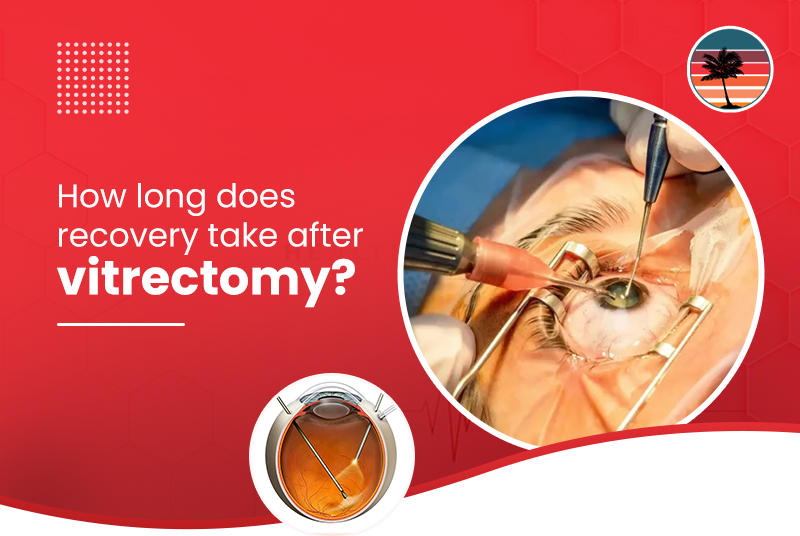
A vitrectomy is eye surgery in which a retina surgeon removes the vitreous, the clear gel in the middle of the eye. The surgeon then fills the space with saline solution, a gas bubble, or silicone oil, and your eye gradually produces its own fluid to replace it.
Surgeons perform vitrectomy to treat conditions such as retinal detachment, macular holes, macular pucker (epiretinal membrane), diabetic vitreous hemorrhage, and troublesome floaters.
Why Do Recovery Times Vary?
Your timeline depends on several factors:
- The condition treated: A macular pucker often recovers more quickly than a complex retinal detachment.
- What was placed in the eye: A gas bubble means you’ll have head-positioning and travel limits. Silicone oil usually requires a second procedure to remove it later.
- Macula involvement: If the macula (your sharpest-vision area) was detached before surgery, visual recovery generally takes longer.
- Your overall health: Conditions such as diabetes can influence healing.
The Two Phases of Recovery
Phase 1, surface healing (about 2 to 4 weeks):
The small surgical incisions heal. Redness, soreness, and light sensitivity fade, and you can resume many everyday activities.
Phase 2, visual recovery (about 3 to 6 months, sometimes longer):
The retina settles, and vision sharpens gradually. If the macula was detached, improvement can continue for a year or more. A gas bubble can stay in the eye for several weeks, so your vision may still change during Phase 1 even as the eye feels better.
Week-by-Week Recovery Timeline
These are typical ranges. Your surgeon’s instructions always take priority over general guidance.
Day 1 and Week 1: Rest, Drops, and Positioning
- First visit: You will usually see your surgeon the day after surgery, and again within the first week or two, to check eye pressure and the repair.
- Eye shield: Wear it as directed, especially while sleeping, to prevent accidental rubbing.
- Eye drops: Use each drop exactly as prescribed. These typically include an antibiotic and an anti-inflammatory.
- Head positioning: If you have a gas bubble, you may be asked to hold a specific position, such as face-down for a macular hole. Positioning can last from a few days to a week or more, depending on your condition and your surgeon. The bubble must press against the repair site to seal it, so consistency matters.
- Comfort: Mild soreness or a gritty feeling is common. Severe pain is not.
- Vision: Expect very blurry vision. With a gas bubble, it can feel like looking through water, and you may see a wavy line that moves as you move your head. That line is the edge of the bubble.
Important: Do not fly or travel to high altitude with a gas bubble. Changes in air pressure can make the bubble expand, which can dangerously raise eye pressure and cause permanent vision loss. This includes driving through mountains. Tell any other doctor or dentist about your bubble, because you must also avoid nitrous oxide while gas is in the eye.
Weeks 2 to 4: Early Progress
- Gas bubble: It shrinks gradually. Shorter-acting gases last about 2 to 3 weeks, and longer-acting gases can take 6 to 8 weeks.
- Work: Many desk workers return within 1 to 2 weeks with their surgeon’s approval, depending on positioning needs. Physically demanding jobs may need 4 to 6 weeks or more.
- Activity limits: Avoid heavy lifting, bending at the waist, and strenuous exercise unless your surgeon says otherwise.
- Vision: Still blurry or wavy. This is expected while the retina heals.
Weeks 4 to 8: Settling Down
- Clarity: Most patients notice meaningful sharpening as the bubble clears.
- Driving: It is legal in Florida to drive as long as your non-surgical eye has 20/40 or better visual acuity. You should wait to drive until you feel comfortable and safe doing so. If you didn’t need a gas bubble, many patients can see out of the surgical eye pretty well again within a few weeks. With a bubble, your vision will be abnormal in the surgical eye until it has mostly absorbed.
- Exercise: Walking and gentle activity are usually fine. Return to harder workouts only when your surgeon agrees.
- Follow-up exams: Dilated exams confirm the retina is staying attached.
3 to 6 Months: Final Visual Outcome
- Stabilizing vision: Most patients reach their best vision in this window.
- If the macula detached: Improvement can continue for 12 months or longer.
- Silicone oil: If the surgeon used oil, a second surgery to remove it is typically planned after several months.
A Long-Term Note: Cataracts
Vitrectomy commonly speeds up cataract formation, especially in people who still have their natural lens. Many patients eventually need cataract surgery, and this is a recognized, expected change rather than a sign that something went wrong. Your retina specialist will monitor your lenses and refer you to a cataract surgeon when it is time.
When to Call Us Right Away
Contact your retina surgeon the same day if you notice:
- A new shadow, curtain, or dark area in your vision
- A sudden increase in floaters or flashes of light
- Severe or worsening pain that medication does not relieve
- Sudden vision loss, or vision that is getting worse instead of better
- Increasing redness, swelling, or discharge
These can signal infection, retinal re-detachment, or high eye pressure, and prompt treatment helps protect your vision. If you cannot reach your surgeon after hours, follow the emergency instructions you were given, or go to the nearest emergency room.
Questions to Ask at Your Next Visit
Whether you are preparing for surgery or already recovering, these questions help you plan:
- How long do I need to keep my head in a certain position?
- Which type of gas or oil is in my eye, and when will it be gone?
- When can I return to work, drive, exercise, and travel?
- Which symptoms should make me call right away, and who do I call after hours?
- Should I expect to need cataract surgery in the future?
Retina Care You Can Trust, Close to Home
Retina Vitreous Associates of Florida is a physician-owned, retina-only practice. Our fellowship-trained retina specialists have cared for Tampa Bay patients since 1971, and we are independent, so your care decisions stay with your doctors. We provide clear positioning instructions, personalized recovery plans, and a team you can reach with questions.
We see patients in Tampa, Temple Terrace, Wesley Chapel, Clearwater, St. Petersburg, Palm Harbor, and Trinity.
Questions about your recovery, or need a retina evaluation? Contact RVAF to schedule an appointment.
Frequently Asked Questions
1. How Long Does Recovery After Vitrectomy Take?
Surface healing usually takes 2 to 4 weeks, while visual recovery typically continues for 3 to 6 months. If the macula was detached before surgery, improvement can last a year or longer. Your surgeon will tell you what to expect for your specific condition and procedure.
2. When Can I Drive After Vitrectomy?
You may drive once your surgeon clears you and your vision meets legal requirements. Many patients without a gas bubble drive again within a few weeks. With a bubble, vision and depth perception are limited, so most people wait until it has mostly absorbed.
3. When Can I Fly After Vitrectomy?
Not while a gas bubble remains in your eye, because altitude changes can make it expand and dangerously raise eye pressure. Short-acting gases last roughly 2 to 3 weeks and long-acting gases 6 to 8 weeks. Fly only after your surgeon confirms the bubble is gone.
4. When Can I Return to Work After Vitrectomy?
Many desk workers return within 1 to 2 weeks, though head positioning or blurry vision may extend that. Physically demanding jobs often require 4 to 6 weeks or more because lifting and straining raise eye pressure. Your surgeon will confirm a safe timeline for your role.
5. Will My Vision Be Perfect After Vitrectomy?
Not always, but many patients see significant improvement. Your final vision depends on the condition treated, your macula’s health, how long it was affected, and how well you heal. Your surgeon can give you realistic expectations before and after surgery.
6. What Should I Avoid After Vitrectomy?
Avoid flying or high altitudes with a gas bubble, rubbing your eye, heavy lifting, bending at the waist, and strenuous exercise. Follow your positioning and eye-drop instructions exactly as given. Ask your surgeon before swimming, using hot tubs, or resuming contact sports.
7. Will I Need Cataract Surgery After Vitrectomy?
Many patients do, because vitrectomy tends to speed up cataract development in eyes with a natural lens. It is an expected change, not a complication. Cataract surgery can usually restore clarity once your retina has healed and your surgeon advises it.
8. Is Recovery From a Vitrectomy Painful?
Most patients describe mild soreness, scratchiness, or a dull ache rather than severe pain. Over-the-counter pain relievers are often enough, if your surgeon approves them. Severe or worsening pain is not typical, so call your surgeon promptly if it occurs.