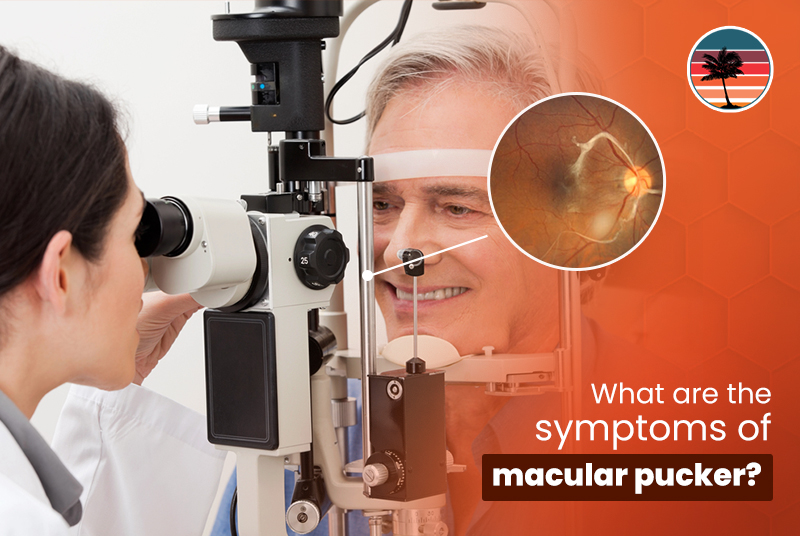
Do straight lines look wavy? Does a door frame seem bent, or do words look blurred when you read? These changes may be early macular pucker symptoms.
Macular puckers are also called epiretinal membranes and sometimes even cellophane maculopathy.
A macular pucker affects your central vision, which you use to read, drive, and recognize faces. The good news is that most cases are mild and many never need surgery. Still, it helps to know the signs. This guide explains the symptoms, how doctors diagnose the condition, and which treatments are available.
What Is a Macular Pucker?
The macula is the small, central part of your retina at the back of the eye. It lets you see fine detail. A macular pucker is a thin layer of scar-like tissue that forms on the macula’s surface. As the tissue tightens, it pulls on the retina and makes it wrinkle.
You may also hear it called an epiretinal membrane or surface wrinkling retinopathy.
Common Macular Pucker Symptoms
The most common symptom is distorted vision, which doctors call metamorphopsia. Straight lines look wavy or bent. Other symptoms include:
- Blurred or hazy central vision
- Trouble reading or focusing on small print
- Difficulty with fine tasks, such as threading a needle
- A gray or cloudy spot in the center of your vision
These symptoms usually develop slowly, over weeks or months.
Why Symptoms Are Easy to Miss
A pucker often affects only one eye. Your brain blends the images from both eyes, so the problem can stay hidden for a while. That is why you should check each eye on its own.
A 10-Second Home Test
- Cover one eye.
- Look at a straight edge, such as a door frame or a grid.
- Switch eyes and compare.
If lines look wavy or broken in one eye, schedule an eye exam.
When to Seek Urgent Care
Other conditions can cause similar distortion, including retinal detachment and blocked blood vessels in the retina. Call your eye doctor right away if you notice any of these:
- Sudden new distortion or vision loss
- A sudden shower of floaters or flashes of light
- A shadow or curtain across part of your vision
Prompt care can protect your sight.
How Doctors Diagnose a Macular Pucker
A retina specialist usually follows these steps:
- Medical history: Your symptoms, health, and medications.
- Visual acuity test: Reading an eye chart to measure sharpness.
- Dilated eye exam: Drops widen your pupils so the doctor can examine the retina.
- OCT scan: Optical coherence tomography creates a detailed cross-section image of the macula. It shows the pucker and any swelling.
- Fluorescein angiography (if needed): A dye test that checks blood flow and rules out other conditions.
Does a Macular Pucker Get Worse?
Usually not. Most puckers stay stable once they form. Studies suggest that about 80% remain unchanged, about 15% progress, and about 5% improve on their own. When a pucker does progress, it tends to happen early.
For that reason, many patients with mild symptoms simply have their vision monitored with regular exams and OCT scans.
Treatment Options
Observation
If your vision is good and symptoms are mild, your doctor may recommend watching the pucker over time. You can choose surgery later if things change.
Vitrectomy Surgery
If the pucker interferes with reading or driving, your surgeon may recommend a vitrectomy. During this procedure, the surgeon removes the vitreous gel from the eye and gently peels away the membrane. About 80% of patients see improvement. Most gains occur in the first few months, and vision can keep improving for a year or two.
Treating Related Conditions
Cataracts or macular swelling can add to blurred vision. Treating them may help.
What to Know Before Surgery
- Timing matters: Earlier treatment generally gives better results.
- Risks are small but real: They include infection, bleeding, retinal detachment, and faster cataract development.
- Recovery takes patience: Your doctor will guide your activity and schedule follow-up visits.
Protect Your Vision With Expert Retina Care
Retina Vitreous Associates of Florida (RVAF) has served Tampa Bay since 1971. Our board-certified, fellowship-trained retina specialists use advanced OCT imaging to track macular pucker and other retinal conditions. When surgery is the right choice, we provide skilled surgical care.
Notice wavy lines or blurred central vision? Schedule an exam with RVAF today.
Retina Vitreous Associates of Florida: Protecting Vision. Restoring Clarity.
Frequently Asked Questions
1. What Is the First Sign of a Macular Pucker?
The earliest and most common sign is distorted vision. Straight lines, such as door frames or text lines, may look wavy or bent. Some people also notice mild blurring in the center of their vision. These changes often show up in one eye first, so test each eye separately.
2. Will a Macular Pucker Go Away on Its Own?
Sometimes, but it is uncommon. About 5% of puckers improve without treatment, and most stay the same. A small share worsen over time. Because outcomes vary, regular monitoring with your retina specialist is the safest approach.
3. Can a Macular Pucker Affect Both Eyes?
Yes. Roughly one in four people with a pucker in one eye eventually develops one in the other. The second eye is often milder and may cause no symptoms at first. Check each eye with the home test, and keep up with your exams.
4. Is Macular Pucker Surgery Worth It?
For most people with vision-limiting symptoms, yes. About 80% of patients see improvement after a vitrectomy, and many find reading and daily tasks easier. Results are often better when surgery happens before long-term damage develops. Your retina specialist can help you weigh the benefits and risks.
5. How Fast Does a Macular Pucker Develop?
Most puckers form slowly, and symptoms may appear gradually over several weeks to months. Many then stabilize and change very little. If a pucker is going to worsen, it often does so early. Regular exams show whether yours is changing.
6. What Makes a Macular Pucker Worse?
No everyday activity is known to worsen a pucker. Its course depends mostly on how the tissue behaves over time. Other eye conditions, such as cataracts or macular swelling, can add to vision problems. Treating them can improve your overall sight.