The thought of seeing flashing lights or a curtain-like shadow come down over your eye is petrifying. You may fear permanently losing your eyesight and visual independence. Losing your everyday routine-driving, working, and reading-can quickly become an unbearable weight.
A detached retina is an emergency; immediate care is essential to prevent blindness and preserve vision. The good news is that retina specialists can effectively treat a detached retina, helping save your vision.
Continue reading to learn how surgeons repair a detached retina, what to expect during your recovery, and how quickly you’ll need to act to preserve your sight.
What is a Detached Retina?
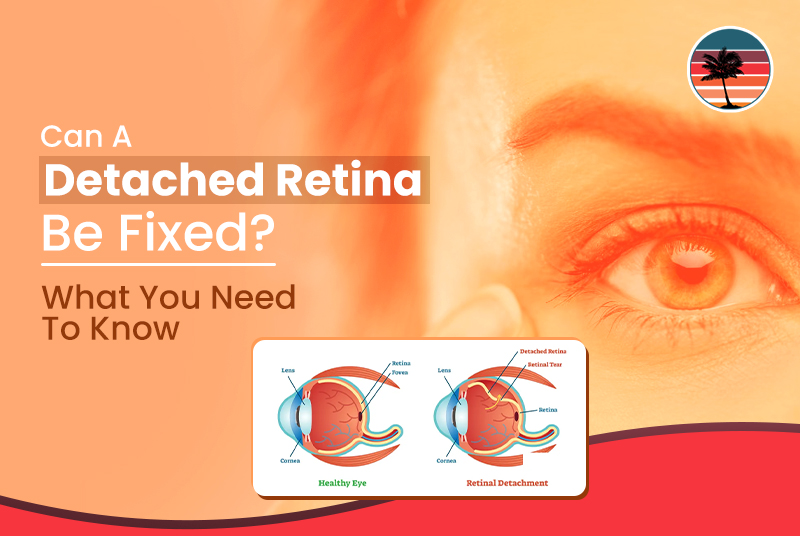
To understand how successful a surgical repair is, it makes sense first to consider how a detachment harms the eye. Let’s explore the anatomy of the eye and exactly what happens when the retina separates. Your retina is a layer of light-sensitive cells covering the back of your eye.
Think of it like a camera film, converting light and feeding images into your brain.
Retinal detachment occurs when this incredibly important layer separates from the back of your eye. When this happens, the retina no longer gets a blood supply. This deprives the retina of essential oxygen and nutrients.
Ultimately, the light-sensing cells in your retina die without prompt medical attention, leading to permanent vision loss.
- Rhegmatogenous: You develop a tear or hole in your retina, and liquid oozes underneath. Your retina then lifts like wallpaper coming off a damp wall. That’s the most usual one.
- Tractional: There is a contraction of scar tissue on the retina that tugs the layer off the back of the eye. This is typically the type seen in advanced proliferative diabetic retinopathy.
- Exudative: This condition arises when a person experiences swelling, infection, or a growth in their retina. The pressure from the built-up liquid lifts it off the underlying tissue, even without holes or tears.
Can a Detached Retina Be Fixed?
Okay, so you know now what happens when your retina detaches – but the question weighing on your mind right now must be this one: how successful are the surgeries today, and what do the results look like?
Well, the answer is yes – the surgery works! In fact, today’s retina repair surgeries reattach the retina with just one surgery about ninety percent of the time. Unfortunately, just because you had a successful surgery doesn’t necessarily mean your vision will be perfectly normal after the repair.
There are a few factors that determine the quality of your vision after surgery, including how quickly you seek treatment and which areas of your retina detach.
If your detachment extends into your macula, your risk of permanent vision changes increases substantially. This is because your macula is responsible for the clarity and sharpness of your vision. Essentially, if it detaches before surgery, your chances of retaining your fine-detail vision will decrease, especially with longer detaches.
Keep yourself informed about potential signs of a detached retina by checking out our guide to recognizing early symptoms.
Advanced Surgical Repair Options
When you need repair work, your retina doctor will perform one of these procedures. So, let’s learn more about the three main ways surgeons correct retinal detachment.
Surgery is the only way to repair a detached retina; you won’t see a retina detach and magically “reattach” itself. You have one of three state-of-the-art options to choose from for surgery:
- Pneumatic Retinopexy: To perform this surgery, the doctor injects a tiny air bubble into the middle of the eye. The air bubble sits atop the tear, holding the retinal tissue back against the eye wall. The doctor seals the tear using a laser or an instrument to freeze the area. It’s a popular, simple procedure for small detachments.
- Scleral Buckle: The surgeon places a narrow, silicone band or buckle over the white portion of your eye. The band slightly indents the wall of your eye towards the retinal detachment to release traction. Then your surgeon freezes the tears in your retina.
- Vitrectomy: Your surgeon uses tiny cuts to extract the vitreous humor that’s inside your eye. Tears are mended with a laser, and then your eye is refilled with either gas or an oil bubble. This bubble keeps your retina lifted while it heals. If you’ve been fitted with an oil bubble, your doctor will remove it several months later.
What to Expect During Recovery?
So, what’s the road ahead for your retina once it’s been patched back up by your surgeon? Let’s take a look at the specific instructions you need to adhere to for the sake of your mending eye over the next few weeks.
The duration of your recovery will be determined by the type of procedure your surgeon performed. While the healing period for most retinal surgeries is around three to eight weeks, the retina can take as long as one full year to recover totally.
If your surgeon performed a surgery that included a gas bubble in your eye, you’ll be on strict face-down or side-lying head positioning for a period of several days to weeks. This helps to keep that bubble in place and, in doing so, keep the retina from sliding off the wall of your eye.
You’ll want to avoid any air travel or other activities at high altitudes, as any change in pressure could cause the gas bubble to grow, leading to a new tear in your eye. It’s not uncommon to experience some blurry vision, floaters, and slight discomfort.
When to Seek Emergency Care?
And during your recovery, be aware. Watch out for these signs that you need to see a retinal specialist right away and on an emergency basis:
Call a retina specialist as soon as you see a sudden flash of lights or notice dark floaters streaming into your vision. Call even sooner if you notice a dark curtain or shadow moving across your vision. If any of these occur, the tearing or detaching retina needs to be repaired surgically ASAP!
Schedule Your Consultation Today
The best way to invest in your future sight is to take action today. Here are the steps to take to protect your vision for years to come.
Detached retina is a surgical emergency, but you are not in this battle alone. Our team of world-class retina surgeons at Retina Vitreous Associates of Florida is trained to reconstruct the retina with state-of-the-art imaging and microsurgery. Don’t wait any longer out of fear and allow yourself to lose vision.
Take advantage of a comprehensive eye exam from one of our experts today to protect your independence and sight. Click here to book your appointment with our team now!
At Retina Vitreous Associates of Florida, we are dedicated to providing the highest-quality care to protect your vision for life.
Frequently Asked Questions (FAQs)
1. Can A Detached Retina Heal On Its Own?
No, there is no way a detached retina can heal on its own. You need to see a retina specialist right away to get it surgically reattached so you don’t lose vision permanently and irretrievably.
2. How Long Do You Have To Fix A Detached Retina?
Most retinal detachments require surgery within one or two weeks. In generally, the sooner you can get to surgery the better. Early intervention reduces the risk that the retinal detachment will affect your central vision, the area responsible for your high-resolutionvision.
3. Is Retinal Detachment Surgery Painful?
The surgery is not painful, but some patients have discomfort after surgery. Before surgery starts, the doctor injects local anesthesia into your eye and provides you with sedatives to keep you relaxed and comfortable for the surgery.