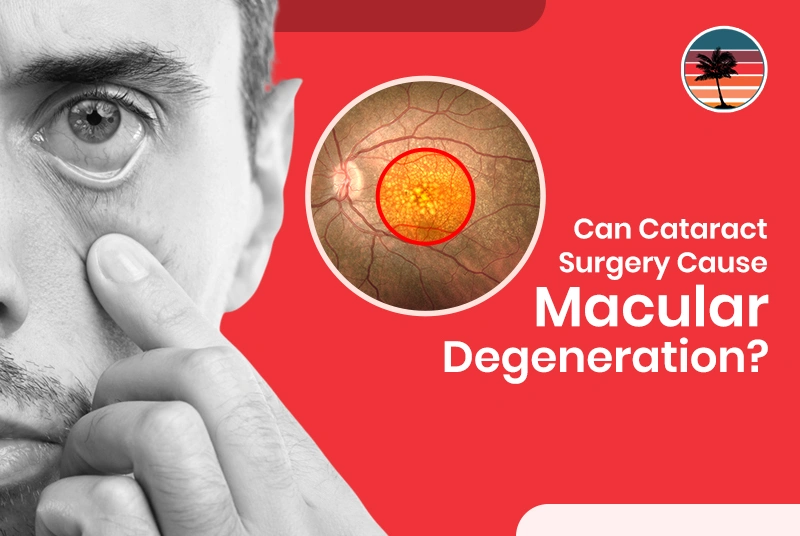
If you need cataract surgery and you also have macular degeneration, you could be very concerned about making your vision worse. Many fear the surgery will accelerate their AMD or that their vision will be worse than before. You wonder, especially when your doctor recommends this, if the risks outweigh the benefits.
The good news is unequivocal: cataract surgery does not cause macular degeneration or worsen it. Recent studies, which followed more than 4,500 eyes over 10 years, further support the fact that modern cataract surgery does not increase the risk of AMD progression. You can move forward with surgery, knowing it will improve your vision without harming your macula.
What Are Cataracts And Macular Degeneration?
Cataracts and macular degeneration are different parts of your eye that are affected. The lens at the front of your eye becomes clouded by a cataract, blocking light from reaching the retina. In macular degeneration, the retina at the back of your eye gets damaged, particularly an area called the macula, which is responsible for your central vision. These are two different conditions, but they can go together, especially as you age.
Does Cataract Surgery Worsen AMD?
Recent evidence indicates that cataract surgery does not accelerate AMD. The AREDS 2 followed patients up for as long as 10 years without finding an increased risk of late AMD following cataract surgery. The extensive study provides robust evidence of the safety of this surgery for patients with AMD.
Clinic-based studies confirm this observation. Such research has followed patients with early or moderate AMD for 12 months after cataract surgery without demonstrating any faster progression to late AMD. The Australian Cataract Surgery and Age-Related Macular Degeneration Study also found no difference in late AMD rates between eyes that had surgery and those that did not at 5 years.
Why the Confusion about Risk?
Several early population-based studies associated cataract surgery with the progression of AMD. The Beaver Dam Eye Study and Blue Mountains Eye Study indicated that late AMD was more common among individuals who had undergone cataract surgery. These studies, however, had some significant limitations.
This confusion likely arises from shared risk factors. The significant risk factors for both conditions include age. Individuals who develop cataracts often have early signs of AMD and, therefore, are more likely to develop late AMD independent of surgery. These newer studies considered these factors and did not find a valid link.
What About Inflammation?
Some experts theorized that inflammation from cataract surgery could aggravate AMD. However, clinical evidence does not support this concern. The surgical inflammatory response does not appear to hasten AMD progression in real-world outcomes.
Should You Have Cataract Surgery If You Have AMD?
If you have AMD and cataracts that are affecting your vision, you should talk to your doctor about cataract surgery. It can improve your vision without increasing your risk of AMD. Research indicates that significant visual and quality of life improvements in patients with AMD after cataract surgery are achieved regardless of AMD severity.
After surgery, a keen follow-up is essential. AMD may progress naturally over time, so this will help early detection of any changes. This allows for early treatment should signs of advanced AMD develop.
RVAF – Clarity You Can Trust, Care You Deserve
Can cataract surgery cause macular degeneration? Cataract surgery is safe for people with AMD. The surgery corrects vision problems caused by cataracts without worsening or causing macular degeneration. While earlier studies raise concerns, the most comprehensive and recent research shows no increased risk.
Don’t let fear stand in the way of better vision. If cataracts impede your daily life and you have concerns about AMD, make an appointment with an eye care specialist. At RVAF, we offer professional advice and personalized care to help you make informed, confident decisions about your eye health. Our staff understands the special challenges of managing both conditions. It will develop a treatment plan with your needs in mind.
Ready to see clearly again? Schedule an appointment at RVAF today and be one step closer to restored vision.