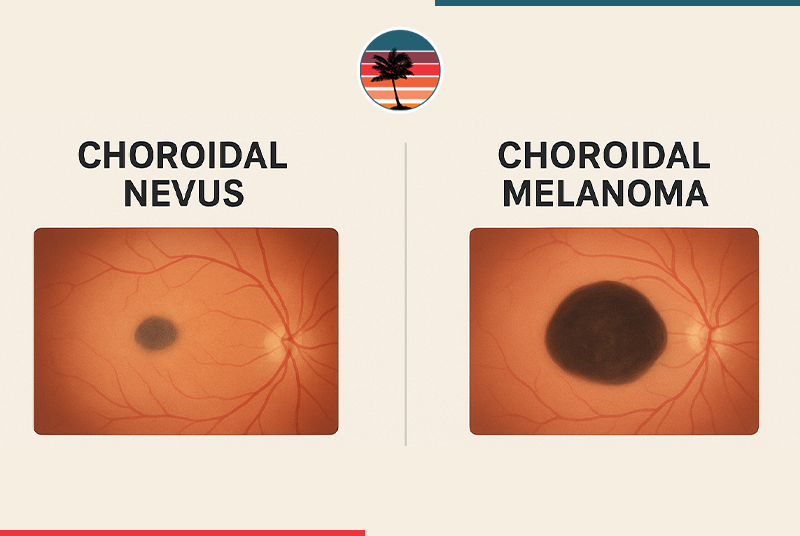
Eye care is more important than you would think. Two conditions that often puzzle people are choroidal nevus and choroidal melanoma. These eye spots may appear similar, but they are pretty different.
One is safe. The other is extremely dangerous. Knowing the difference would save your eyes and your life.
This guide provides you with everything you need to know. We will cover symptoms, treatment options, and when to consult a doctor. We will begin at the beginning.
What Is A Choroidal Nevus?
A choroidal nevus is similar to a freckle in your eye. It is a flat, dark spot that appears in the choroid. The choroid is the layer of blood vessels in the back of your retina.
These are very common. About 5-10% of individuals have them. Most individuals are unaware that they possess one.
Major Characteristics of Choroidal Nevus
1. Size and Shape
Choroidal nevus spots tend to be extremely tiny and transparent. They are commonly smaller than 3 millimeters in diameter, which is extremely small compared to other issues with one’s eyes. They have flat borders that are well-defined, resulting in distinct edges.
They can shift from brown to gray to black, depending on the person. One of their main characteristics is that they do not grow or enlarge with time.
2. Symptoms
Most individuals with a choroidal nevus will not experience any symptoms. The most prominent feature of these benign tumors is that they often do not cause any symptoms. They do not feel pain or discomfort in most instances.
Vision is still fine, and the majority of people do not realize they have one until they undergo a routine eye examination, when their doctor examines the inside of their eye.
3. Risk Level
Choroidal nevus is benign, or not cancerous, and is not harmful in the short run. The risk of the formation of cancer from these lesions is exceedingly low, with a less than 1% chance of developing over an individual’s lifetime.
As a result of this low risk, they are considered safe to follow up on over time, rather than requiring immediate treatment.
What Is Choroidal Melanoma?
Choroidal melanoma is a type of cancer that affects the eye. It begins in the same part of the eye as a nevus. But unlike a nevus, melanoma increases in size and spreads.
This is not a common, but a serious, cancer. It occurs in approximately five individuals per million annually. Early treatment is required for optimal results.
Key Points on Choroidal Melanoma
1. Size and Growth
Melanomas are larger than benign lesions of nevus and are usually greater than 3 millimeters in size. Unlike fixed nevi, melanomas increase in size and number over time.
They also look elevated and thick, with a dome shape that bulges into the eye. The edges of melanomas can appear irregular and less well-defined than the smooth edge of a nevus.
2. Symptoms
Choroidal melanoma typically causes unobstructed visual problems that get progressively worse. Patients may experience loss of vision or persistent blurriness that does not improve with contact lenses or glasses. Individuals typically complain of perceiving flashes of light, particularly in the peripheral vision.
Dark patches can occur in what you can see and get bigger over time. You can also lose peripheral vision since the tumor impacts other areas of the retina. While less common, some patients experience eye pain, although this is rare in the early stages.
3. Risk Level
Choroidal melanoma is a highly malignant form of cancer that can metastasize. Without treatment, it will metastasize to the rest of the body, primarily the liver. It is thus hazardous, and therefore, treatment must be obtained as soon as it is diagnosed.
The seriousness of the cancer is so great that postponing treatment will drastically affect the result.
Key Differences: Side-By-Side Comparison
|
Feature |
Choroidal Nevus |
Choroidal Melanoma |
|
Nature |
Benign (harmless) |
Malignant (cancer) |
|
Size |
Usually under 3mm |
Often over 3mm |
|
Growth |
Stays the same |
Grows larger |
|
Thickness |
Flat |
Thick and raised |
|
Symptoms |
Usually none |
Vision changes |
|
Treatment |
Just watching |
Surgery or radiation |
|
Spread risk |
None |
Can spread to the liver |
|
Follow-up |
Every 6-12 months |
Immediate treatment |
Key Differences to Note
1. Growth Pattern
Nevus spots are always the same size for years. Melanomas gradually enlarge over several months or years. If an eye spot grows larger, it needs to be checked by a doctor right away.
2. Vision Impact
A choroidal nevus rarely affects vision, as it is typically small and stable. Melanoma commonly causes vision problems early on, as it enlarges and becomes thicker, disrupting the retina’s function.
3. Urgency
Nevus is treated with periodic follow-up by a watch-and-wait method. Melanoma requires urgent care and swift treatment to prevent its spread.
4. Treatment Approach
Nevus requires only observation with regular follow-up visits and photographs. Melanoma requires aggressive treatment such as surgery, radiation, or other means to treat.
Symptoms to Watch For
Choroidal Nevus Warning Signs
Ninety percent of individuals have no symptoms. Look for new eye problems, notice growth, color alteration, or lingering flashing lights.
Melanoma Red Flags
• Changes in Vision: Progressive blurred vision, increasing black spots, side vision loss, wavy or distorted lines
• Light Issues: Recurring flashing lights, light sensitivity, halos around lights
• Physical Symptoms: Eye pain, pressure, bulging eye, pupil changes
When Should You Call Your Doctor Immediately?
Call immediately for sudden loss of vision, new persistent flashing lights, increasing dark spots, gradual worsening of vision over days/weeks, or eye pain accompanied by vision issues. Do not delay for appointments.
Risk Factors
Choroidal Nevus
• Age greater than 40 (increases with age)
• Light eyes and skin color
• Family history of eye problems
• Excessive UV exposure
Choroidal Melanoma
• People over 50
• Light-colored skin and eyes
• Family history of melanoma
• Excessive exposure to sunlight, unprotected welding
• Skin melanoma history, atypical moles
• Weakened immune system
Diagnostic Techniques
First Eye Check-Up
Vision testing, comprehensive eye exam, photography, and measurements to create a baseline.
Improved Testing
• Ultrasound: Reveals thickness and blood flow (crucial for differentiating nevus from melanoma)
• Photography: Captures the size, shape, and color for monitoring changes
• Specialized imaging: OCT and fluorescein angiography for detailed scrutiny
Advancements in modern diagnostics, like advances in retinal imaging and early detection, are helping specialists detect changes at their earliest stages, improving treatment outcomes dramatically
Monitoring Schedule
• Nevus: Every 6-12 months initially, then annually
• Melanoma: Urgent assessment in days
Treatment Options
Choroidal Nevus
A watch-and-wait strategy with frequent monitoring, photography, and protection against UV radiation. No active therapy required.
Choroidal Melanoma
• Surgery: Removal of the tumor, enucleation, laser, cryotherapy
• Radiation: Plaque brachytherapy, external beam therapy, proton therapy, stereotactic radiosurgery.
• Size, location, patient age, and vision in the other eye determine the treatment of choice.
Prevention and Early Identification
Protection
• Every day, UV-blocking glasses (100% UV protection)
• Wide-brimmed hats, avoid peak sun hours
• Annual eye examinations after 40 years
• Tell your doctor about your family history.
Self-Monitoring
Watch for changes in vision, such as black spots, flashing lights, or eye pain. Seek immediate care for sudden change or worsening symptoms over weeks/days.
Living with These Conditions
Emotional Support
Ask questions, seek second opinions, become involved in support groups, and consider counseling. Involve family and seek assistance when needed.
Useful Tips
• Having good light at home and work
• Large-print materials, magnifying tools
• Workplace accommodations, if needed
• Periodic eye relief from near work
Remember: Early detection saves vision. Trust your instincts and don’t wait to seek care for concerning symptoms.
Your Vision Can’t Wait – Expert Care Is Just One Call Away
To understand your eye health, you must understand the distinction between melanoma and choroidal nevus.
Choroidal nevus is a harmless and benign condition that occurs in 5-10% of the population. “Eye freckles” require only periodic monitoring and infrequently present a problem. Patients typically lead everyday lives with periodic follow-ups.
Choroidal melanoma is a rare but serious eye cancer requiring immediate treatment. It can spread if untreated, but early detection leads to good outcomes.
The bottom line is that any vision changes require urgent medical attention. Don’t delay or try to diagnose yourself. Your vision is priceless.
Regular eye exams keep serious issues at bay. Catching problems early saves your vision and even your life.
Don’t gamble with your vision. The retina specialists at Retina Vitreous Associates of Florida have been protecting Tampa Bay’s vision for over 54 years. They apply the latest technology and expert care for every retinal issue, including choroidal nevi and melanoma. Their staff stands ready to help you. Schedule your eye exam today at rvaf.com – your eyesight is worth the best care.
Remember: when preserving your eyesight, it’s always safer to be safe rather than regretful.