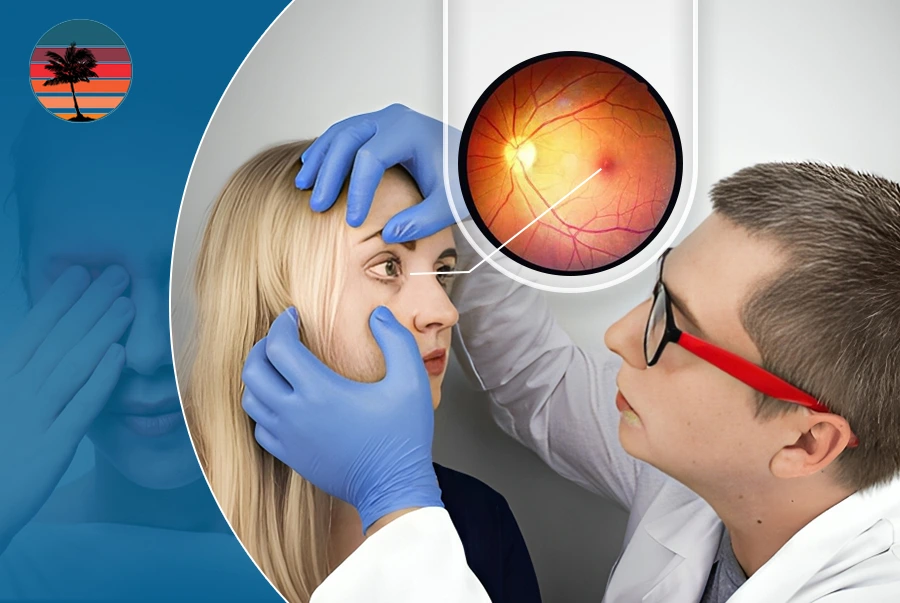
Have you ever tried looking directly at the sun or watching a solar eclipse? Although it might seem risk-free, the long-term damage it can cause to your eyes can be significant.
Solar retinopathy is a rare but serious ocular condition that can develop from looking at the sun without adequate protection. Many people ask what solar retinopathy looks like.
This blog will explain solar retinopathy and how to treat it. Furthermore, we will explore its causes, symptoms, diagnosis, who’s at risk, and, more importantly, how to prevent it.
Understanding Solar Retinopathy
Solar retinopathy is damage to the light-sensitive part of the eye, the retina. It occurs when you expose your eyes to intense light, typically from the sun, without adequate protection. Concentrated light can harm the retina in a matter of seconds since it is delicate.
You allow high-energy visible light and ultraviolet (UV) rays to reach the retina when you watch solar eclipses or look at the sun directly. It can burn or alter the cells in the central part of the retina, particularly the macula, which ensures sharp central vision.
The damage is often painless and not immediately noticeable. Thus, many people don’t realize they’ve injured their eyes until hours or days later.
What Are the Causes & Symptoms of Solar Retinopathy?
-
What Causes Solar Retinopathy?
The leading cause of solar retinopathy is direct exposure to sunlight or other high-intensity light sources, especially without proper eye protection. We have detailed the most common situations that cause solar retinopathy:
- Watching solar eclipses without appropriate solar filters
- Sunbathing while looking toward the sun
- Using magnifying devices or cameras without solar filters
- Accidental exposure to welding arcs or laser pointers
This intense light initiates a photochemical reaction in the photoreceptor cells and retinal pigment epithelium (RPE). The reaction damages or destroys those cells, leading to a loss of visual function.
-
What Are the Solar Retinopathy Symptoms?
Solar retinopathy symptoms usually appear within hours to a couple of days after exposure. We have detailed the common symptoms:
- Blurry central vision
- A central dark or blind spot (central scotoma)
- Distortion of straight lines (metamorphopsia)
- Difficulty reading or focusing on small objects
- Light sensitivity (photophobia)
- Altered color perception (dyschromatopsia)
- Visual hallucinations or flashing lights
Depending on the nature of the exposure, these symptoms can appear in one or both eyes. Even brief exposure—less than 30 seconds—can result in damage.
What Does Solar Retinopathy Look Like?
From a clinical perspective, here’s a comprehensive breakdown of what solar retinopathy looks like. We have detailed the distinct ways it appears during an eye exam:
- Ophthalmoscope/Slit Lamp Examination
- Tiny, yellow-white lesions in the center of the retina
- A slight central depression or hole in the macula
- Swelling or disruption in the photoreceptor layer
- Optical Coherence Tomography (OCT)
- Breaks or thinning in the outer retina layers
- Disruption of the ellipsoid zone and interdigitation zone
- Changes in the retinal pigment epithelium
- Visual Function Tests
- Decreased acuity (often 20/60 or worse)
- Loss of contrast sensitivity
- Central blind spots
Patients often explain it as “a smudge in the center of vision” that refuses to disappear. The images captured through retinal scans offer doctors an extensive view of where and how the retina has faced damage.
Who Gets Affected by Solar Retinopathy?
Although anyone can develop solar retinopathy, some are at higher risk than others. According to the Cleveland Clinic and Verywell Health, the most at-risk groups include:
-
People Watching Solar Eclipses without Protection
This is the most common cause of solar retinopathy in modern times. During eclipses, the sun’s brightness is deceiving, making it easier to look at for longer—but it’s just as dangerous.
-
Outdoor Enthusiasts
Hikers, sunbathers, and beachgoers often spend extended time in sunlight. Even lying back and looking at the sky on a bright day can lead to exposure.
-
Children and Teenagers
Younger people may not understand the risks of sun exposure and are more likely to look at bright light out of curiosity.
-
People Using Optical Devices without Filters
Photographers and telescope users who skip solar filters risk directing concentrated sunlight into their eyes.
How to Treat Solar Retinopathy?
There’s no acute cure for solar retinopathy, as the damage is caused by light-induced injury to the retina. But most mild to moderate cases improve on their own over time.
-
What You Can Expect
- Observation: Most eye doctors will monitor the retina for 3–6 months.
- Vision May Improve: Some patients recover partial vision within weeks or months.
- Permanent Damage: Sometimes, the central vision never fully returns.
- Low Vision Aids: Magnifiers and reading aids may help patients with lasting symptoms.
-
Clinical Options
- Steroids: In rare cases, topical or oral steroids may reduce inflammation, although evidence for their effectiveness is limited.
- Anti-inflammatory medications: These may relieve secondary symptoms like eye strain or swelling.
If your symptoms don’t improve or worsen, schedule a consultation session with a skilled solar retinopathy professional. A retinal specialist can run visual acuity tests and OCT imaging to assess damage and plan supportive care. You can also explore advances in retina care for improved vision outcomes for the latest treatments and strategies to preserve vision.
Preventing Solar Retinopathy Is the Best Approach
You must consider prevention as the best treatment, as no proven cure exists. We have detailed how to prevent solar retinopathy effectively:
-
Never Look Directly at the Sun
Even a few seconds of direct sun exposure can cause damage. Always assume that direct sun exposure is unsafe unless proper protection is used.
-
Use ISO-Certified Solar Eclipse Glasses
Only use glasses that meet the ISO 12312-2 standard for direct solar viewing. Regular sunglasses, even dark ones, do not offer enough protection.
-
Use Solar Filters on Optical Devices
Binoculars, telescopes, and cameras should have solar filters on the front end (not over the eyepiece). Without this, the sun’s rays can be concentrated and magnified, increasing the risk.
-
Educate Children and Teens
Schools, parents, and teachers should educate young students before solar events about how to view the sun safely—or avoid looking altogether.
-
Stay Aware During Solar Eclipses
During an eclipse, the sun may not feel as bright, but the UV and infrared rays can still be dangerous. These events lead to the most reported cases of solar retinopathy globally.
Living with Solar Retinopathy
Although some people recover fully, the rest survive with long-term effects. We have detailed the necessary steps for protecting your remaining vision and adapting if you’ve had a case of solar retinopathy:
- Use low-vision tools such as magnifiers and screen readers
- Visit your eye doctor regularly to monitor changes
- Avoid bright light and reduce glare when reading or using screens
- Practice good eye health habits: healthy diet, hydration, and UV protection
Final Thoughts
So, what does solar retinopathy look like? If you are battling the symptoms, the ocular condition will look like a blurry spot in the center of your vision. It will hinder your ability to focus on fine details. To a doctor, it appears as a small, often subtle retinal lesion that can have lasting effects if not addressed.
The bottom line? Prevention is everything. Once the damage is done, there’s no guaranteed way to undo it. If you think you’ve experienced symptoms, seek out a solar retinopathy specialist immediately.
At Retina Vitreous Associates of Florida (RVAF), our team is trained in diagnosing and managing retinal conditions like solar retinopathy. We use state-of-the-art imaging and personalized care plans to help you protect and preserve your vision.
Frequently Asked Questions
1. What does vision look like with solar retinopathy?
Vision typically shows a small blurry or dark spot (scotoma) in the center of sight, often in one or both eyes. Straight lines may look wavy or distorted (metamorphopsia), colors can appear altered, and there may be increased sensitivity to light. Symptoms usually appear within hours of sun exposure, though they can be delayed by a day or two.
2. Can you recover from solar retinopathy?
Partial recovery is common, especially in mild cases, since the retina has some capacity to repair light-induced damage. However, recovery is often incomplete many people are left with some permanent reduction in central vision or a faint residual blind spot, depending on how severe and prolonged the exposure was.
3. How long does solar retinopathy last?
Mild cases often improve within a few weeks to a few months. Moderate to severe cases can take 6–12 months to reach maximum improvement, and some visual deficits (like a persistent scotoma or blurred central vision) may be permanent.
4. What is the best treatment for solar retinopathy?
There is no proven cure; treatment is mainly supportive. Doctors may recommend avoiding further light exposure, wearing UV-protective sunglasses, and monitoring the retina over time. In some cases, oral steroids or anti-inflammatory therapy have been tried, though evidence for their effectiveness is limited. Prevention (never viewing the sun directly without proper solar filters) remains the best approach.
5. How is solar retinopathy diagnosed?
Diagnosis is based on a history of sun exposure combined with a dilated eye exam. Optical coherence tomography (OCT) is the key diagnostic tool. It shows characteristic damage to the outer retinal layers (photoreceptors and RPE) at the fovea. Fundus autofluorescence and fluorescein angiography may also be used to assess the extent of damage.