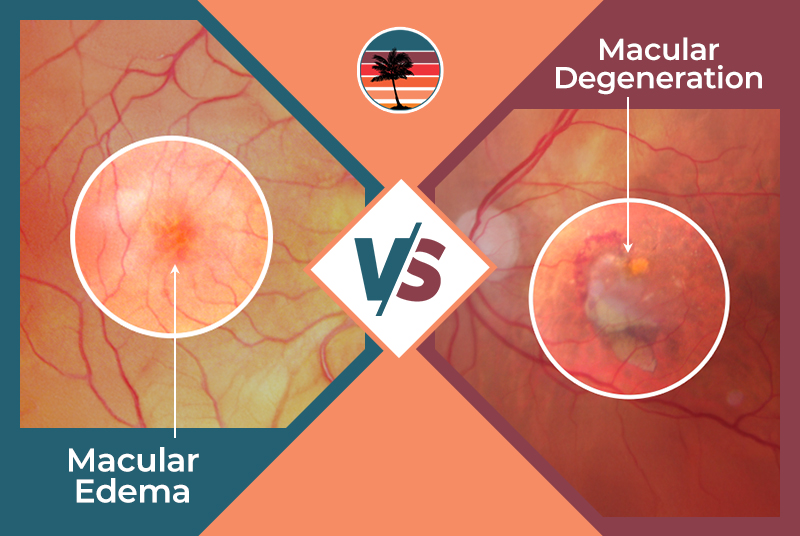
Do you have trouble seeing, and do you dread what could be the reason? Does fear of losing your good vision disrupt your sleep? Most people feel apprehensive when they experience a change in their vision, fearing a serious condition.
These terms, macular edema and macular degeneration, may sound frightening—but they don’t equal each other. Knowing the distinction enables you to determine what you need to do and how to access help. This blog provides straightforward guidance to help you take care of your eyes.
Macular edema and macular degeneration are two distinct yet potentially devastating conditions that affect the central part of your retina, also known as the macula. The macula enables central, clear vision.
What Is Macular Edema?
Macular edema occurs when the macula becomes swollen due to fluid leakage from damaged blood vessels in the retina. The fluid may leak due to diabetes, closed veins, inflammation, or following eye surgery. The usual indicators include hazy central vision, difficulty reading, and muted colors. Haze caused by macular edema may often be prevented by early treatment with drugs, injection, or laser treatment.
What Is Macular Degeneration?
Macular degeneration, also known as age-related macular degeneration (AMD), is a condition that causes the macula to deteriorate over time. For symptoms, treatments, and the latest advances in care, see this guide on macular degeneration. There are two forms—dry and wet. The dry form occurs when the retinal tissues thin down. In contrast, the damp form consists of the formation of abnormal blood vessels beneath the retina, which tend to bleed or leak fluid.
Early features include a gradual decline in vision, an inability to identify faces, and straight lines appearing wavy. AMD is almost exclusively a disorder of aging, and one of the leading causes of blindness for people over the age of 60 years in the United States. Present treatment merely delays the condition, but AMD cannot be cured.
Key Differences
| Feature | Macular Edema | Macular Degeneration |
| Cause | Fluid leakage from retinal vessels due to diabetes, veins, or surgery | Breakdown of retinal tissue, abnormal vessels due to aging |
| Age group affected | Any age (familiar with diabetes/inflammation) | Mainly older adults (age 60+) |
| How vision changes | Sudden or gradual blurriness, colors dull | Gradual loss of central vision, distortion, trouble with faces/reading |
| Treatment | Medications, injections, and lasers are usually treatable if caught early | Injections, laser for wet AMD; slow progression, but no cure for dry AMD |
| Main risk factors | Diabetes, high blood pressure, eye surgery, and inflammation | Aging, family history, smoking, and heart disease |
Preventing and Managing
Routine eye examinations help detect macular edema and macular degeneration early. Learn why early detection of retinal vein occlusion and macular edema matters for protecting sight. Staying ahead of diabetes and blood pressure may lower the risk of developing edema. Early macular degeneration may also be slowed by eating a well-balanced diet, quitting smoking, and protecting the eyes from the sun.
Nutritional Support for Eye Health
Nutrients also play a role in maintaining retinal health. Lutein and zeaxanthin are antioxidants that are capable of crossing the blood-retinal barrier to reach the retina and absorb harmful blue light that can cause oxidative damage. These carotenoids are found in green, leafy vegetables (spinach and kale).
Vitamin E can help prevent fatty acids from being oxidized in the retina and potentially help prevent cataracts while slowing the progression of AMD. Omega-3 fatty acids are also crucial for supporting overall eye health and function. Vitamin C is a potent antioxidant, and beta-carotene is a precursor to vitamin A, which is utilized by light-sensing photoreceptor cells in the retina.
Understanding Risk Factors
Genetics is thought to account for 46% to 71% of your risk of developing AMD, and researchers have identified over 51 regions of chromosomes that may increase your risk. If you have a parent or sibling with AMD, your risk of developing AMD is doubled (i.e., 50% of you with a parent would get it).
Smoking is likely to become the most significant modifiable risk factor, where smokers are 3 to 4 times more likely to develop age-related macular degeneration relative to non-smokers, and 5 to 10 years earlier onset. Smokers with wet AMD may also be less likely to respond to therapy.
Your Vision Is Our Mission
Macular edema and macular degeneration may also damage your vision. Macular edema also occurs when blood vessels leak and is often correctable. Macular degeneration typically develops with age, and corrective treatment may only temporarily postpone vision decline. Early detection offers the most incredible opportunity to preserve your vision—get a referral to a retinal specialist if your vision changes.
If you notice a change in your vision or have questions about your eye health, don’t delay. Professional assistance can be invaluable. Schedule an appointment with the experienced retina doctors at https://rvaf.com/ for a thorough examination and sound guidance. Your vision matters, act today for better eyes.