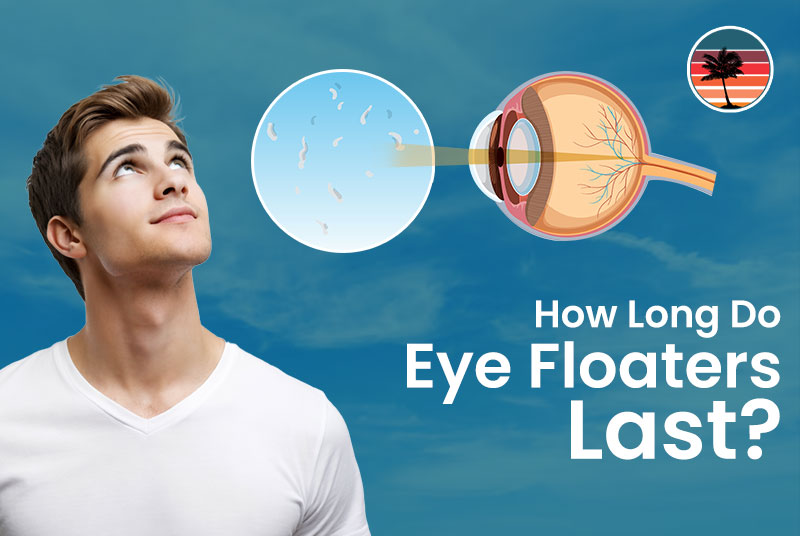
You notice small dots floating around your vision. They move out of the way when you look in their direction. These are eye floaters, and most people experience them at some point.
But how long do eye floaters last? More importantly, when should you worry about them?
From how long eye floaters typically last to warning signs that require immediate medical attention, this guide covers all the crucial aspects.
What Are Eye Floaters?
Eye floaters are small shapes that drift through your sight. They may appear to be dots, circles, lines, or even cobweb-like threads floating in front of your eyes.
These shapes aren’t on the surface of your eye. They float within the vitreous, the gel-like substance that fills the eyeball. As you move your eyes, floaters glide along with you.
Most eye floaters are harmless. They become more noticeable when you are looking at bright, plain backgrounds, like a white wall or a clear blue sky.
How Long Do Eye Floaters Usually Last?
The duration of eye floaters depends on their cause and severity.
Temporary floaters sometimes disappear in days or weeks. These often occur after rubbing your eyes too hard or experiencing minor eye strain.
Chronic floaters may persist for several months or even years. The most common type of chronic floaters is age-related floaters, which develop as the vitreous gel breaks down over time.
Permanent floaters may never completely disappear. However, your brain learns to ignore them over time, which may take several weeks to months. The appearance of floaters diminishes even though they are still there.
The timelines for recent floaters following eye injuries or surgeries vary; some may fade in weeks, while others may remain visible for longer.
Factors Affecting the Duration of Eye Floaters
Several factors determine how long your eye floaters last.
- Age is a significant determinant. Generally, people over 50 have more persistent floaters because the vitreous gel tends to liquefy over time, producing debris that gives rise to them.
- The cause makes the difference. Inflammation or bleeding is bound to take longer to resolve than other simple changes in the vitreous. Conditions such as posterior vitreous detachment affect the duration of the floaters.
- The severity dictates the timeline. A few small floaters may fade faster, whereas many large ones may take longer. Dense floaters take longer to break down or settle.
Your general eye health will determine how soon recovery occurs. People with diabetes, hypertension, or other eye disorders could have more persistent floaters.
When Eye Floaters Fade vs. When They Stay
Eye floaters can fade through two major routes:
- Your brain gets used to them. This is neuroadaptation. Your visual system learns to filter the floaters out of your consciousness. The floaters remain in your eye, but you stop noticing them during daily activities.
- Physical changes may occur: Some floaters can break down into smaller pieces, becoming less noticeable. Sometimes, floaters settle to the bottom of the eye, out of your line of vision.
However, some floaters never fade completely. Large, dense floaters often remain visible for life. Age-related floaters due to vitreous degeneration usually persist but cause less trouble over time.
The critical difference is whether the floaters bother your vision. Stable floaters, which do not change, are usually not a concern. Sudden changes need immediate attention and evaluation.
Warning Signs That Need Immediate Attention
Specific symptoms indicate a serious eye problem that requires prompt attention.
- An onset of suddenly seeing more floaters is a warning sign. If you notice many new floaters within hours or days, call an eye doctor immediately.
- Flashes of light, along with the floaters, can indicate a retinal problem; these flashes are often seen as lightning streaks or camera flashes off in the corner of your eyes.
- Loss of peripheral vision is an emergency sign. If you notice a shadow, curtain, or dark area in part of your vision, seek help right away.
- A sudden shower of floaters with dark dots or cobwebs can signify a possible retinal tear or detachment; seek same-day evaluation.
- If floaters are accompanied by eye pain or redness, inflammation or infection may be the cause; do not wait for further consultation.
Symptoms indicative of retinal tears, retinal detachment, or vitreous hemorrhage include these, and immediate treatment may be necessary to prevent permanent vision loss.
Treatment Options For Persistent Floaters Include
Most eye floaters do not require treatment, though several options may be pursued for severe cases.
- First is observation, where your eye doctor monitors floater development during periodic checks. Without intervention, many people learn to adapt after 3–6 months.
- Laser vitreolysis breaks up large floaters using focused laser energy, usually performed as an outpatient procedure, and is best indicated for a few types of floaters. Success rates vary; not all floaters respond to laser treatment.
- Vitrectomy surgery removes the vitreous gel containing the floaters and replaces it with a clear solution. Risks of this procedure include retinal detachment and cataracts, and it is generally reserved for severe cases that significantly impede vision.
- Proper illumination, reduced screen time, and efforts to reduce eye strain enhance conservative management and tend to make floaters less intrusive for most.
Coping with Eye Floaters: Some Tips
The following strategies can help reduce their impact on daily life:
- Adjust your lighting: bright lights increase floater visibility. Use softer, indirect lighting for reading or work, and avoid staring at white walls or bright skies.
- Move your eyes deliberately: Consciously moving your eyes can temporarily shift floaters out of your central vision. Look up, down, and side to side to relocate them.
- Avoid eye fatigue by breaking away from screens often and following the 20–20–20 rule: every 20 minutes, look away at something 20 feet away for 20 seconds.
- Hydrate yourself: Good hydration helps the vitreous gel maintain its healthy consistency. Drink enough water throughout your day.
- Sunglasses: Wearing sunglasses when outdoors reduces glare and makes floaters less noticeable in bright conditions.
- Focus on other objects: when floaters appear, shift your attention to your task or surroundings to train your brain to ignore them.
- Manage stress: Anxiety can amplify perceptions of floaters, so helping a person relax might reduce fixation on them.
RVAF-Protecting Your Vision, Preserving Your Future
Eye floaters can last from days to years, depending on their cause. Most people learn to adapt within months as the brain learns to filter them out.
Remember key points:
- Temporary floaters fade within weeks
- Age-related floaters continue but are less noticeable
- Brain adaptation matters more than physical disappearance.
- Sudden changes require immediate medical attention.
Warning signs include a sudden increase in floaters, light flashes, or loss of vision; these need urgent evaluation to avoid serious complications. Most floaters are harmless, but the quality of your vision is best taken care of by experts.
Schedule a consultation with RVAF today for comprehensive eye care and personalized treatment plans. Visit RVAF today or give us a call to set up an appointment.
Frequently Asked Questions
1. How long do eye floaters usually last?
However, most eye floaters fade away within days to weeks as your brain gets used to them. But there are times when floaters can stay forever without causing any problems with your eyesight.
2. When should I worry about eye floaters?
Contact your eye doctor immediately if you experience an increase in floaters, seeing flashing lights, vision loss, or a curtain effect in your field of vision. This could mean a torn or detached retina.
3. Are eye floaters a normal part of aging?
Yes. The eye floaters are an inevitable component of aging as the vitreous gel becomes less elastic and more compact.
4. Can you prevent eye floaters?
Age-related eye floaters can rarely be prevented. Eye exams will aid in detecting retina issues early on, thus ensuring that any symptoms are checked out immediately.