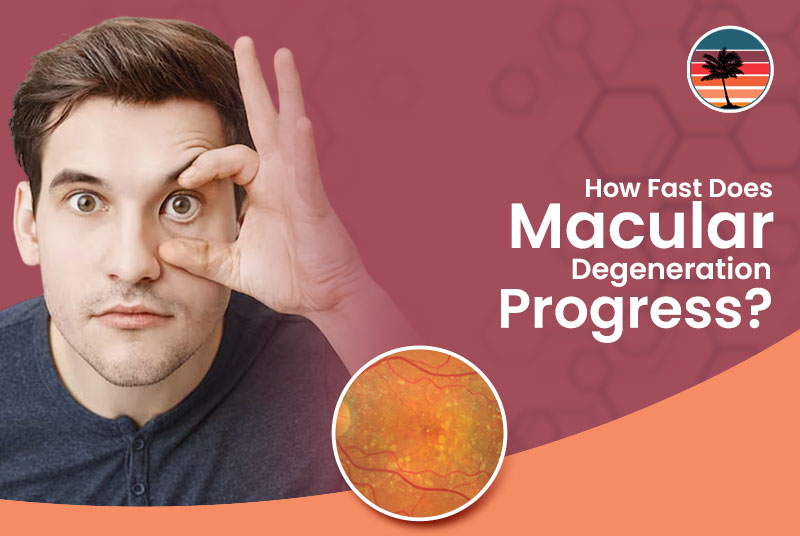
Macular degeneration can be unnerving. Small changes in your vision can raise concerns about what the future may hold, and you may question, “How fast does macular degeneration progress?” and how that could impact daily life.
This guide takes you through the rate of progression, the variables that determine its speed, and practical steps you can take.
The aim is simple: to help you understand the condition so that you can act early and protect your vision as much as possible.
What is Macular Degeneration?
Macular degeneration is an eye disease that targets the macula, the central region of the retina responsible for sharp, detailed vision. The macula is what you rely on to read, drive, and recognize faces.
When it is damaged, your central vision becomes blurry or distorted, while your peripheral vision usually remains intact. Most people develop a type called age-related macular degeneration, or AMD.
There exist two broad types:
-
Dry macular degeneration
-
Wet macular degeneration
Dry AMD is more common, while Wet AMD is less common but more serious. Both forms can affect daily life, but their progression can vary widely.
For a broader overview of symptoms, testing, and treatment options, also see this detailed guide: Understanding Macular Degeneration: Symptoms, Treatment Options, and Advances in Care.
Dry Macular Degeneration Progression Timeline
Most cases of AMD are the dry type; it usually progresses slowly, taking years to develop rather than days or weeks.
Doctors generally refer to three stages:
-
Early dry AMD
In this stage, symptoms may not be evident. Your eye doctor might find small yellow deposits beneath the retina called drusen. The vision in such situations is usually clear, and early dry AMD may remain stable for several years.
-
Intermediate Dry AMD
You may notice slight changes: a bit of blurring and a need for more light to read. This early stage can last 5–10 years or more, at a different pace for different people.
-
Advanced Dry AMD
Geographic atrophy. Here, patches of macular cells die, creating a dark or empty area in central vision. Reading and driving become difficult. It may take many years for dry AMD to get to this stage, and for some people, it never does.
So, how fast does macular degeneration progress when it’s dry? In most cases, dry form changes very slowly over time. Regular eye exams help monitor these changes and guide appropriate next steps.
Wet Macular Degeneration Progression Timeline
Wet macular degeneration is less common but more aggressive; it may develop from dry AMD. In wet AMD, abnormal blood vessels form beneath the retina, leaking blood or fluid and causing sudden damage to the macula.
This can progress much faster than dry AMD, and vision may change over days or weeks: straight lines may appear wavy or bent, or a dark or blank spot may appear in the center of sight.
If left untreated, severe vision loss from wet AMD can occur rapidly; however, with frequent treatment, many people can slow the progression of this potentially blinding eye disease and maintain usable vision for longer.
So, to the question, “How fast does macular degeneration progress” in wet AMD, the answer is that it can be swift. That’s why any sudden change in central vision is an eye emergency requiring immediate care from an eye specialist.
Factors Affecting Speed of Progression
Macular degeneration does not progress at the same rate in everyone. It can depend upon several factors, including:
- Age: The risk increases after age 50, and the older you are, the greater the chance of progression.
- Family and genetics: Having close relatives with AMD will increase your risk, while genetics may play a part in the speed at which AMD progresses.
- Smoking: One of the strongest risk factors for both the development and the progression of AMD is smoking.
- Diet and Nutrition: A diet devoid of fruits, vegetables, and omega-3 fatty acids will increase the risk, while a healthy diet may help slow the condition.
- Weight, blood pressure, and heart health: Obesity, high blood pressure, and vascular disease can affect blood flow in the retina and the rate of progression.
- Sun exposure: Prolonged, unprotected exposure to strong sunlight can strain the retina.
- Control of other eye conditions: Glaucoma or diabetic eye disease can worsen the general condition of the eye and vision.
These factors do not guarantee fast or slow progression, but they shape your risk. A doctor can review your history and help estimate your personal outlook.
Warning Signs of Faster Progression
Knowing the warning signs will help you take immediate action. Some changes may indicate that macular degeneration is getting worse more quickly.
Watch for:
- Blurred central vision that may be worse over several weeks or months
- Difficulty reading, even when wearing glasses.
- Difficulty in recognizing faces
- Straight lines appear bent, wavy, or broken
- A dark, gray, or empty area in the center of your vision
- Colours which have a faded or washed-out look
- Sudden changes in vision in one or both eyes
If you notice any sudden change, seek urgent eye care. Sudden distortion or a new dark spot might mean you have wet AMD, and early treatment can help save more of your sight and slow the damage.
Many doctors recommend using an Amsler grid for day-to-day tracking at home: look at a small grid of straight lines and note any new waves, bends, or missing areas.
If this occurs, contact your eye doctor right away.
Can You Slow Down Progression?
You cannot cure macular degeneration right now. But you can often slow it. The earlier you act, the better your chances of protecting your sight.
Useful steps include:
-
Regular Eye Exams
Get a dilated eye exam as often as your doctor advises. Early changes usually show up before symptoms.
-
AREDS2 Vitamin Supplements
For some people with intermediate or advanced dry AMD, doctors may suggest a specific mix of vitamins and minerals. This is based on the AREDS2 study. These are not regular multivitamins. Only start them after you talk to your eye specialist.
-
Stop Smoking
Quitting smoking may be the single most powerful step you can take. It lowers your risk of progression and helps your overall health.
-
Eat A Healthy Diet
Focus on leafy greens, colorful fruits, nuts, whole grains, and fish rich in omega-3 fatty acids. This pattern supports eye health.
-
Exercise And Manage Health Conditions
Stay active if your doctor allows it. Control blood pressure, cholesterol, and blood sugar. Good circulation supports the retina.
-
Protect Your Eyes From UV Light
Wear sunglasses that block UV rays when you go outside. A wide-brimmed hat adds extra protection.
For wet AMD, medical treatment is essential:
-
Anti-VEGF Injections
Doctors can inject medicine into the eye to block abnormal blood vessel growth. These injections can slow or stop leaks. Many people keep or even improve their vision with regular treatment.
-
Laser Treatments (In Select Cases)
Some patients may benefit from laser treatment, though it is less common than injections now.
Your eye doctor will design a plan based on your AMD stage and type. Following that plan closely gives you the best chance to slow progression.
Living with Macular Degeneration
Macular degeneration changes how you see the world. But it does not have to take away your independence or quality of life. Many tools and strategies can help you adapt.
Helpful options include:
-
Low-Vision Aids
Magnifying glasses, high-powered reading glasses, and digital magnifiers make text and objects easier to see.
-
Electronic Tools And Apps
Smartphones and tablets can zoom text, increase contrast, and read text aloud. Voice assistants can help with calls, messages, and reminders.
-
Better Lighting At Home
Bright, focused light helps with reading and close work. Avoid glare. Use adjustable lamps near your favorite chair or desk.
-
High-Contrast Markings
Use bold, dark pens. Add contrast tape to steps, edges, and appliance controls.
-
Training With A Low-Vision Specialist
Specialists teach skills to improve your use of peripheral vision. They can suggest the best tools for your daily tasks.
-
Emotional Support
Vision changes can cause fear, stress, or sadness. Support groups, counseling, or talking with others who have AMD can help you cope.
With the right help, many people continue to enjoy hobbies, stay social, and manage daily tasks. Planning and using available resources make a big difference.
RVAF: Caring for Your Vision, Every Step of the Way
So, how fast does macular degeneration progress? It depends on the type and your personal risk factors. Dry AMD often progresses slowly over the years. Wet AMD can progress rapidly over days or weeks and requires urgent care.
You can take meaningful steps to protect your vision:
-
Get regular eye exams
-
Act quickly if you notice vision changes
-
Follow your doctor’s treatment plan
-
Choose healthy habits to support your eyes
With early action, modern treatments, and practical tools, many people keep doing what they love for a long time.
Schedule a comprehensive eye exam at RVAF today. Our experienced specialists use advanced diagnostic tools to detect macular degeneration early and create personalized treatment plans. Don’t wait—early detection saves sight.