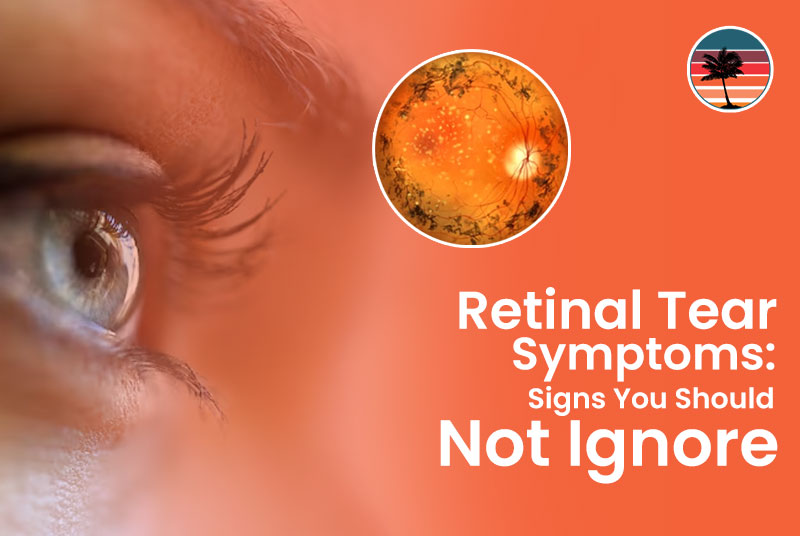
Your eyes are fragile, and a retinal tear is a serious problem that can lead to permanent vision loss if left untreated. The key is to recognize early symptoms of a torn retina and take immediate action.
This guide will explain what a retinal tear is, the main warning signs, who is at risk, and how doctors treat it. Use this as a quick, explicit reference to protect your sight.
What Is A Retinal Tear?
The retina is a thin layer at the back of your eye. It senses light and sends images to your brain. A tear occurs when this layer is ripped or develops a hole, most often due to the vitreous, the gel inside the eye, shrinking and tugging on the retina with increasing age.
The early stage is a retinal tear. If fluid passes through the tear and lifts the retina off the wall of the eye, it becomes a retinal detachment. Detachment is more serious and can cause permanent vision loss.
Leading causes and risk factors:
- Aging changes in the eye
- Injuries or trauma to the eye
- Pre-existing severe nearsightedness
- Prior eye surgery
- Family history or retinal thinning
Not every tear leads to detachment; however, every tear does require prompt attention.
7 Critical Symptoms Of Retinal Tear
Learn these key retinal tear symptoms, so you know when to get help.
1. Sudden Increase in Eye Floaters
They are dots, lines, or cobweb-like objects that appear to float before your eyes. A few floaters are normal. The danger sign is the sudden appearance of many new floaters, like a swarm of little spots that develop within hours or days.
That can mean the vitreous is pulling on-or even tearing-the retina. If you see a sudden shower of floaters, call an eye doctor right away.
2. Flashes of Light (Photopsia)
You may see bright flashes, streaks, or “lightning” at the edge of your vision, especially in dim light. These flashes come from the vitreous tugging on the retina.
Flashes that continue, especially with new floaters, can signal a retinal tear and need urgent evaluation.
3. A Shadow or Curtain in Your Vision
A dark shadow or curtain moving across your field of vision from any direction is a red flag. It may spread over hours or days.
This usually means the tear is allowing fluid to get under the retina, and detachment may be starting. This should be treated as an emergency, and help should be sought within hours.
4. Blurred Vision
Sudden blurred vision may serve as another warning sign, and it does not clear with blinking. The blur may affect all or part of your field of vision.
It can occur when blood or fluid obscures the retina, or when a tear interferes with its function. Blurred vision, coupled with sudden floaters or flashes of light, is severe.
5. Dark Spots in Vision
The dark spots that occur from a retinal tear are large and dense, unlike common floaters. They can appear as ink stains or clouds obscuring what you are trying to see, and often remain in one area.
These spots may indicate bleeding inside the eye due to torn blood vessels. Sudden dark spots need immediate attention.
6. Reduced Peripheral Vision
You may lose side vision and start bumping into objects or missing things on one side. You can test this by looking ahead as you move your fingers along the edges of your field of view.
Many retinal tears and early detachment first affect the outer retina. Any sudden loss of peripheral vision is an emergency.
7. Sensation of a Veil over Your Eye
Some describe a gray film or veil over their vision, like looking through a dirty window. Resting or cleaning your glasses does not fix it.
This may mean fluid has begun to build up under the retina, leading to detachment. Do not wait, seek urgent care.
Understand more about retinal tears and what they can mean to you, as they can be serious.
When To Seek Emergency Care?
Seek emergency care or call your eye doctor right away if you notice:
- A sudden increase in many new floaters
- Repeated flashes of light
- Any shadow, curtain, or veil across your vision
- Sudden loss of vision or extreme blurring of vision
- A combination of floaters and flashes
Retinal tears can quickly develop into detachment. Delays make treatment more difficult and increase the risk of permanent vision loss.
If you are unable to reach your eye doctor, go to:
- A hospital emergency room
- Urgent care center specializing in eye care
- Another eye clinic that provides emergency services
Tell them you have symptoms of a possible retinal tear so that they can treat this as urgent.
Who Is At Increased Risk?
Anyone can get a retinal tear, but your risk is greater if you:
- Are over 50
- Have high myopia (very nearsighted)
- Have you had a retinal tear or detachment before
- Family history of problems with the retina
- Have undergone cataract or other eye surgery
- Having had an eye injury
- Have diabetes, high blood pressure, or eye inflammation
- Engage in contact sports or work in high-risk environments
If you belong to these groups, then schedule regular eye examinations and be watchful for new symptoms.
How Physicians Diagnose Retinal Tears?
The eye specialist (ophthalmologist) will:
- Ask about your symptoms and medical history
- Check your vision and eye pressure
- Dilated eye exam, which involves the use of drops to dilate the pupil
- The retina can be viewed with bright light and special lenses.
They may also use, if needed:
- Optical Coherence Tomography (OCT) to view retinal layers
- Ultrasound-if the view is obscured by blood or cloudiness
- Fundus photos: to document the retina
These tests detect tears, bleeding, fluid, or early detachment.
Treatment For A Retinal Tear
If the tear is caught early, physicians can usually seal it and prevent detachment.
1. Laser photocoagulation
A laser produces minor burns around the tear. Scar tissue from these burns seals the retina to the eye wall.
- Performed in the office
- Approx. 10–20 minutes
- Eye drops numb the eye.
- Most people feel only mild discomfort.
2. Cryotherapy
Sometimes, a freezing probe is placed on the outside of the eye to create a scar that closes the tear.
- Also, a short office procedure
- The eye is numbed; you may feel pressure
- The treatments remain effective in most cases and prevent progression to detachment.
3. Recovery and Follow-Up
After treatment,
- Rest as advised
- Avoid heavy lifting and strenuous exercise for a short period of time.
- Use eye drops as prescribed
- Return for follow-up visits to track healing and rule out new tears
When the retina has already detached, surgery such as pneumatic retinopexy or vitrectomy may be necessary. Surgery is more complex but can still save vision if performed quickly.
Prevention Tips
While you can’t prevent them all, you can lower risk and catch them early:
- Get regular eye exams, especially after age 40 or if you’re at high risk
- Wear protective eyewear during sports or hazardous work
- Control conditions such as diabetes, blood pressure, and others
- Understand your personal risk factors
- Watch for new floaters, flashes of light, or vision changes
- Follow all the advice after eye surgery
- Early detection is the best defense.
Rvaf – Advanced Retina Care. Clearer Vision. Better Life.
Eye symptoms that signal a retinal tear are urgent pleas from your eyes for help. A sudden surge of floaters, flashes of light, or a shadow creeping into your vision is not a minor annoyance but an emergency warning sign, one which you should never ignore.
The good news is that retinal tears are treatable, especially when treated early. By taking fast action, eye doctors can seal the tear and often save your sight. At RVAF, experienced retina physicians utilize state-of-the-art equipment and evidence-based treatments to preserve your vision and your way of life.
If you see new floaters, flashing lights, a curtain across your side vision, or any other sudden change in sight, don’t wait. Call RVAF immediately, or use the website to schedule an urgent appointment. Same-day and emergency evaluations can make all the difference between full recovery and permanent vision loss.
Your eyes are priceless. Entrust them to a team committed to saving and restoring sight.