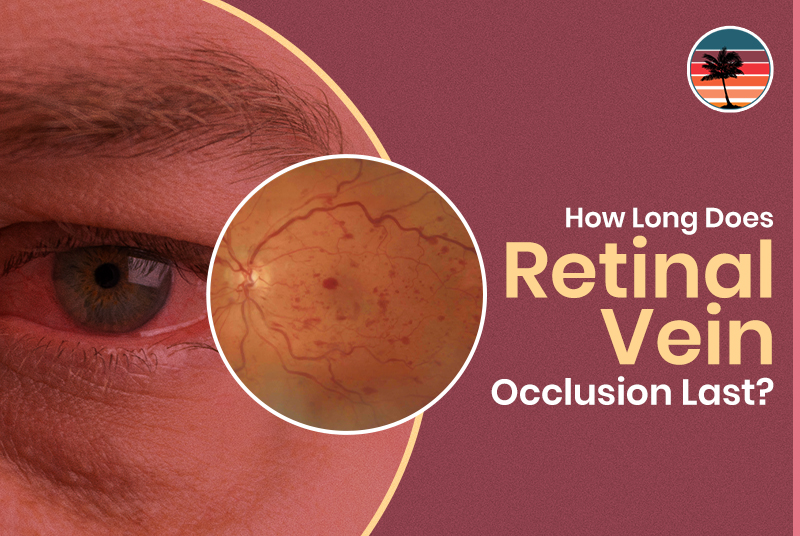
Receiving a diagnosis of retinal vein occlusion can prompt a flood of questions about the future. Will vision recover? Will the blurred vision last? Is vision loss permanent? Such uncertainty can be stressful, particularly once vision changes begin to impact daily life.
Fortunately, for most patients, successful treatment, with prompt follow-up, results in at least partial recovery of vision. Nevertheless, the prognosis varies from patient to patient.
In this guide, you will explore: how long retinal vein occlusion lasts, factors affecting prognosis, and expectations for weeks, months, and years to come.
Quick Answer: How Long Does Retinal Vein Occlusion Last?
The outcome can range from several months to being chronic. Some individuals recover some vision with therapy, while others can lose vision permanently.
Recovery depends on many factors, including the location of the obstruction, the extent of retinal damage, the presence of complications such as macular edema, and the response to therapy.
As each case varies in its progression and outcome, it is beneficial to understand the variables that affect long-term vision. Those would be: the type of RVO, the location of the blockage, and the promptness of treatment.
What Is Retinal Vein Occlusion?
Retinal vein occlusion occurs when a vein that removes blood from the retina, a light-sensitive layer in the eye that sends images to the brain, becomes blocked.
When the blood supply cannot be removed, blood and fluid will spill into the retina, causing it to swell. This can cause blurriness, blind spots, and sight loss. There are two main types:
1. Branch Retinal Vein Occlusion (BRVO)
BRVO is where a smaller branch of a retinal vein is blocked. BRVO is the more common form of RVO and tends to have a better visual prognosis.
2. Central Retinal Vein Occlusion (CRVO)
CRVO is where the main retinal vein is blocked. CRVO typically has more severe effects, resulting in more extensive retinal damage and poorer sight.
It is useful to know whether BRVO or CRVO has been diagnosed, as management and prognosis may vary significantly between these conditions.
How Long Does Vision Recovery Take?
The pattern of visual recovery from retinal vein occlusion is highly variable. Most people recover within a few weeks; others will take months of treatment to achieve stability. The pattern of recovery may be dependent on factors such as;
- The type of retinal vein occlusion.
- The extent of the retinal swelling.
- The promptness of the start of treatment.
- The development of complications.
- The overall condition of the eyes and blood vessels.
In general terms:
- Milder cases may improve within a few weeks to months.
- Cases with macular edema may need treatment over several months.
- More severe cases may need 6 months to a year to stabilize, or more.
- Some cases will require regular, long-term review and treatment over the years.
Most people hope to get some idea of what recovery will entail. Although no two cases are the same, there are certain landmarks that retina specialists tend to see during recovery from BRVO/CRVO.
Recovery Timeline After Retinal Vein Occlusion
The course of recovery can follow some predictable patterns, although it differs from case to case.
|
Timeline |
What You May Experience |
|
First days |
Sudden blurry vision, distorted vision, or dark spots |
|
First few weeks |
Comprehensive eye exams and treatment planning |
|
1–3 months |
Swelling may begin to improve with treatment |
|
3–6 months |
Vision often becomes more stable |
|
6–12 months |
Long-term visual outcomes become clearer |
|
Beyond 1 year |
Continued monitoring or treatment may be necessary |
Not all patients heal quickly; your vision may continue to vary throughout the treatment. To monitor your condition, your retina specialist will want to see you for regular follow-up appointments.
Does Branch Retinal Vein Occlusion Recover Faster Than Central Retinal Vein Occlusion?
For the most part, yes.
Since BRVO affects a smaller part of the retina, a better visual prognosis than for CRVO may be possible. However, visual recovery still depends on the extent of retinal damage and other factors.
|
Feature |
BRVO |
CRVO |
|
Area affected |
Smaller retinal region |
Larger retinal area |
|
Severity |
Often less severe |
Often more severe |
|
Recovery potential |
Generally better |
More variable |
|
Long-term vision loss risk |
Lower |
Higher |
|
Treatment duration |
Often shorter |
Often longer |
BRVO generally carries a better prognosis, but both diseases require early assessment and close follow-up. Early management remains a key component in preventing vision loss.
Factors That Affect How Long Retinal Vein Occlusion Lasts
Not everyone heals at the same rate. Several different factors affect how quickly a patient recovers and what the future holds.
1. Macular Edema
This happens when fluid leaks into the macula, the portion of the retina that enables sharp, detailed central vision.
It is one of the most common causes of persistent blurry vision and a reason patients with this problem require long-term therapy and surveillance.
2. Early Treatment
The earlier a patient is treated for a retinal vein occlusion, the better the chance of saving vision and avoiding complications.
The longer a patient is without treatment, the more time the retina has to suffer damage.
3. The Extent Of The Blockage
Partial occlusions usually do not affect as much of the retina as complete occlusions.
The greater the extent of blockage, the longer the treatment may be and the worse the visual recovery.
4. Ischemic Versus Non-Ischemic Disease
In certain retinal vein occlusions, oxygen delivery to the retina is significantly compromised.
Eyes with severe ischemia are prone to several complications and often recover less of their visual function.
5. Overall Health
Certain diseases that affect the blood vessels can affect healing. These can include:
- Hypertension
- Diabetes
- Hypercholesterolaemia
- Cardiovascular disease
It can also help both vascular and eye health by keeping them well-controlled. It is important to recognize that, due to a multitude of factors, each patient will have their own recovery process, even with similar diagnoses.
Can Retinal Vein Occlusion Go Away on Its Own?
Certain symptoms might resolve with time, but retinal vein occlusion should never be taken lightly.
Problems can arise in the retina long after vision seems to stabilize. Blood flow will be blocked, which can cause swelling and the formation of abnormal blood vessels, which can then cause other problems.
Any sudden vision changes must be evaluated immediately by an eye care specialist.
Most patients think that when the symptoms resolve, the condition has gone away. However, retinal damage can still progress without symptoms.
Can Retinal Vein Occlusion Be Permanent?
Yes, although most patients’ vision can be stabilized through treatment, some may be permanently deprived of vision due to irreparable retinal damage. The likelihood of irreversible vision loss increases if:
- Delayed treatment
- Marked retinal ischemia
- Refractory macular edema
- Serious adverse events are sustained
Despite the many advances in retinal care, once retinal damage has occurred, there is nothing to “undo” it, and this realization emphasizes the importance of early diagnosis and close follow-up.
What Treatments May Improve Recovery?
The treatment plan aims to minimize complications and the effects of retinal swelling to best preserve vision.
Commonly used treatments include:
1. Anti-VEGF Injections
These medicines help to reduce swelling in the retina and improve vision in many patients. The vast majority of people will need several injections over time.
2. Corticosteroids
These may be used in selected patients to reduce inflammation and swelling when other treatments have not proved effective enough.
3. Laser Treatment
Lasers are sometimes used to treat complications arising from a retinal vein occlusion.
4. Managing Coexisting Conditions
These may include blood pressure, cholesterol, and diabetes control, as well as the treatment of cardiovascular risk factors.
The best treatment approach varies from patient to patient. It depends on the type of retinal vein occlusion, the extent of damage, and the individual’s general health.
What Is Everyday Life Like During Recovery?
The majority of people lead relatively normal lives while recovering, though certain changes are likely to occur in their routines.
Things that people sometimes experience during recovery are;
- Trouble with reading small print
- Issues with driving
- Changes in depth perception
- Difficulty recognizing faces when they are farther away
- Distortion when using screens
The road to recovery is not always straightforward, and having an idea of what to expect and when to seek medical help will ease the process.
When Should You See an Eye Doctor?
See an eye doctor right away if you notice:
- Sudden blurry vision
- Vision loss in one eye
- Dark spots or floaters (black specks that appear to drift in your field of vision)
- Distorted vision
- Shadow or curtain in your vision field
Having the condition assessed immediately may prevent retinal vein occlusion and other serious retinal conditions from causing additional harm.
In many cases, an early diagnosis can offer the best chance of preserving vision and preventing further complications.
Retina Vitreous Associates of Florida — Advanced Retinal Care. Lifelong Commitment to Your Vision.
Loss of vision from retinal vein occlusion can persist for months, years, or forever, depending on how the retinal vessel is blocked and the overall health of your retina. While you may recover vision within months, some patients will need lifelong treatment to protect their existing vision.
If you’ve been told your vision has recently changed or have been diagnosed with retinal vein occlusion, then don’t delay, seek a retina specialist today. Your immediate and specialized care will significantly impact the outcome.
At Retina Vitreous Associates of Florida, our board-certified retina specialists use state-of-the-art diagnostic testing and bring extensive expertise to address complex retinal issues. Our team will design a personalized treatment plan for your specific retinal condition and manage it appropriately.
Make your appointment today and take your vision into the future!
Frequently Asked Questions
1. How Long Does Retinal Vein Occlusion Take To Heal?
In most individuals, retinal vein occlusion takes several months to stabilize. Mild symptoms can resolve within weeks, while severe symptoms may take six months to one year or more to stabilize and treat.
2. Can Vision Return To Normal After Retinal Vein Occlusion?
Yes, some of them have very good visual recovery after treatment. Still, it depends on how badly the retina is damaged, how swollen the macula is, how well blood is reaching the retina, and the stage at which treatment started.
3. How Long Do Anti-VEGF Injections Last For Retinal Vein Occlusion?
The Anti-VEGF injections usually last a few weeks. In many patients, repeated injections over months and years are required to control edema and maintain vision improvement.
4. Can Retinal Vein Occlusion Come Back?
The occlusion in question very seldom happens in the same place again. Those with hypertension, diabetes, or vascular disease do appear to have an increased risk of further episodes of retinal circulation compromise.
5. What Happens If Retinal Vein Occlusion Goes Untreated?
Left untreated, retinal vein occlusion may cause chronic retinal swelling, progressive vision loss, abnormal blood vessel growth, glaucoma, and chronic retinal damage that may become difficult to control.