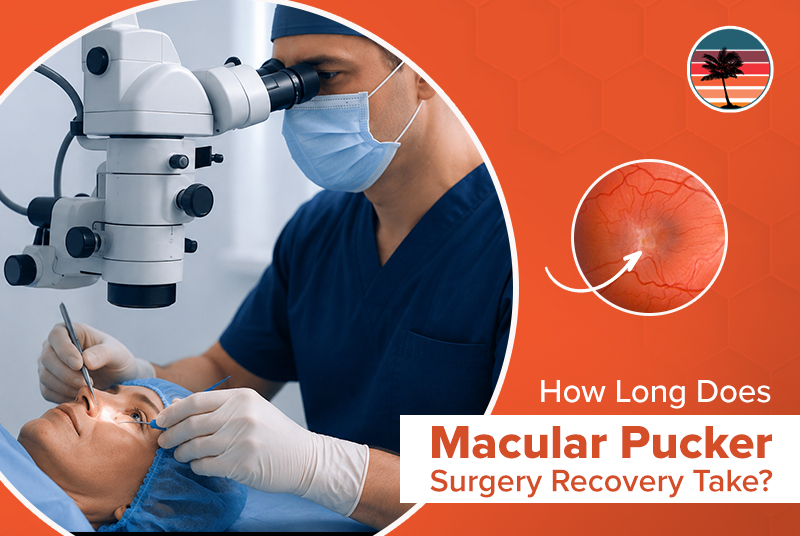
If you are preparing for macular pucker surgery, you may have questions about what recovery will look like and when you can expect your vision to improve. Macular pucker can make everyday activities such as reading, driving, and recognizing fine details more difficult because of distorted or blurred central vision. Understanding what to expect after surgery can help you prepare for the recovery process and know when to contact your retina specialist.
If you are about to undergo macular pucker surgery, there is only one thing you want to hear: how long do I need to recover from surgery to treat macular pucker? Many patients can resume light activities within a few weeks, but visual recovery takes longer. Vision often improves gradually over 3–6 months, and some patients continue to experience improvement beyond this period.
The sections below explain the typical recovery timeline, activity restrictions, vision changes, and warning signs to watch for after surgery.
What Is A Macular Pucker?
Before we delve into the timeline of recovery, let us take a quick look at the condition itself. Learning about the formation of this tissue will help you make sense of the surgery.
A macular pucker, also called an epiretinal membrane, is a thin layer of scar-like tissue that forms on the surface of the retina, usually over the macula. The macula is responsible for the clear, straight-ahead vision that you need for reading and driving.
As the membrane contracts, it can create traction on the macula and distort the retinal surface, causing blurred or distorted central vision. For more information regarding the condition and its origins at the cellular level, be sure to check out our basic guide to macular puckering.
When Does Vision Improve After Surgery?
During surgery, your retina specialist removes the epiretinal membrane that is causing traction on the macula. Here are some details on when you can expect to see changes in your vision:
Your vision may be blurry or hazy immediately after surgery, and it may take time for your eye and retina to recover. Blurred or hazy vision is common during the first several days after surgery. Vision may be especially limited if an air or gas, bubble is placed in the eye. This is due to fluid and swelling within your retina from the surgery and will begin to clear up over the course of 3 to 6 months as your retinal layers flatten.
Some patients continue to experience gradual visual improvement for a year or longer! The amount of visual improvement varies from patient to patient. Factors such as your vision before surgery, how long the membrane was present, and the condition of the macula can affect the outcome. However, this can vary depending on the severity and length of time the pucker was present.
A Chronological Recovery Timeline
The following timeline provides a general overview of recovery, although your individual experience may vary depending on the procedure and you are healing.
• Day 1 to Day 3: Mild discomfort, redness, tearing, and blurred vision may occur during the early postoperative period. Follow your surgeon’s postoperative instructions, including any directions regarding an eye shield or other eye protection.
• Week 1: The redness and irritation start to go away. Continue using your prescribed postoperative eye drops exactly as directed by your surgical team.
• Weeks 2 to 4: Many patients can gradually return to light daily activities, depending on their vision, occupation, and surgeon’s recommendations.
• Weeks 6 to 12: Activity restrictions may continue to ease, while visual recovery can continue for several months. You may have measurements for a new set of glasses if needed to achieve the best vision.
What Restrictions Apply During Recovery?
Your eye will go through these steps to recover. Protecting the eye during recovery is important. Your surgeon will provide specific instructions based on the procedure performed and your individual healing:
Your surgeon may temporarily restrict certain activities during the early recovery period, including the following:
• Heavy lifting: Your surgeon may temporarily restrict heavy lifting and strenuous activity. Follow the specific weight and activity limits provided to you.
• Bending and strenuous activity: Follow your surgeon’s instructions regarding bending, exercise, and other activities that may increase strain during the early recovery period.
• Keep your eye dry: Follow your surgeon’s instructions regarding bathing and keeping water, soap, or shampoo away from the eye during the early postoperative period.
• Maintain head positioning: Most routine macular pucker surgeries do not require prolonged facedown positioning. However, positioning instructions may be necessary if your surgeon performs an additional retinal procedure or places a gas bubble in the eye. If positioning is required, your surgeon will explain the recommended position and how long you need to maintain it.
• No flying: If a gas bubble is placed in your eye, you should not fly or travel to high elevations until your retina specialist confirms that the bubble has completely resolved. Changes in atmospheric pressure can cause the gas bubble to expand and dangerously increase pressure inside the eye, potentially causing severe vision loss.
When Can I Return To Work After Macular Pucker Surgery?
Your return-to-work timeline will depend on your vision, the type of work you do, and your surgeon’s recommendations. Some patients can return to work within one to two weeks, particularly if their job involves light or sedentary duties. Your surgeon can provide more specific guidance based on your recovery.
This timeline can vary greatly based on the type of work you do, so we advise scheduling a meeting with your surgeon. If your work involves heavy lifting, frequent bending, strenuous activity, or exposure to dust and debris, you may need additional time away from work.
What Complications Require Urgent Care?
Although complications are uncommon, it is important to know which symptoms require prompt medical attention. You must know when to seek medical attention. Prompt evaluation can help your retina specialist identify and treat potential complications as early as possible.
Although vitrectomy surgery has an outstanding success rate, some patients do experience complications. Make sure that you contact your retina specialist immediately if you experience any of the warning signs of complications:
• Suddenly you have a sharp decline in the quality of your eyesight.
• You see a rush of brand-new black spots or flashing lights.
• Severe or worsening eye pain that does not improve with your prescribed medications.
• The redness or swelling in your eye increases, or you have Yellow or other abnormal discharge from the eye.
If you still have your natural lens, vitrectomy can increase the risk of developing or accelerating a cataract. Your retina specialist will monitor your natural lens during follow-up. If a cataract develops or progresses enough to affect your vision, cataract surgery may eventually be recommended.
Retina Vitreous Associates of Florida: Providing Excellent Retina Care and Preserving Your Sight for a Lifetime.
At Retina Vitreous Associates of Florida, our board-certified, fellowship-trained retina specialists provide advanced care for conditions affecting the retina, macula, and vitreous.
At Retina Vitreous Associates of Florida, we do not allow distortion to rob you of your daily life and quality time. Our vitreoretinal surgeons have extensive experience performing vitrectomy procedures, including surgery for macular pucker.
Macular pucker surgery is typically performed as an outpatient procedure to remove the membrane causing traction on the macula. Your retina specialist can explain what the procedure and recovery may look like in your individual case!
If you are experiencing distorted or blurred central vision, a retina specialist can evaluate your macula and discuss whether treatment is appropriate for you. Visit our scheduling portal today.
Frequently Asked Questions (FAQs)
1. Does a macular pucker return after surgery?
Recurrence of an epiretinal membrane after successful removal is uncommon, although it can occur in some patients. Your retina specialist will monitor the macula during follow-up and determine whether any additional treatment is necessary.
2. Do I need positioning facedown after macular pucker surgery?
Routine macular pucker surgery often does not require prolonged facedown positioning. However, positioning instructions can vary if additional retinal procedures are performed or a gas bubble is placed. If a gas bubble is used as part of your surgery, your retina specialist will provide specific instructions about positioning and air travel.
3. Will I develop cataracts after vitrectomy surgery?
Vitrectomy can increase the risk of cataract formation or accelerate an existing cataract, particularly in patients who still have their natural lens. One proposed mechanism is that removing the vitreous changes the eye’s oxygen environment, which may contribute to oxidative changes in the natural lens. Your retina specialist will monitor for cataract progression during follow-up and discuss treatment if it begins to affect your vision.