Your doctor has just prescribed Amiodarone for your heart condition, and now you are really concerned about the problems with vision you may have heard about. Will you lose your sight? Should you stop this medication? The concerns are appropriate; understanding what may happen to your eyes can help you make informed decisions with your doctor.
Side effects of taking Amiodarone include some eye changes in almost everyone. You may notice halos around lights at night or experience glare while driving. Or you’ve already experienced blurred vision or difficulty reading, and you’re wondering if it’s serious.
The good news is that most of the amiodarone eye changes do not permanently damage your vision. However, rare, serious complications can occur, so recognizing the warning signs can save your eyesight.
Common Eye Side Effects
-
Corneal Deposits
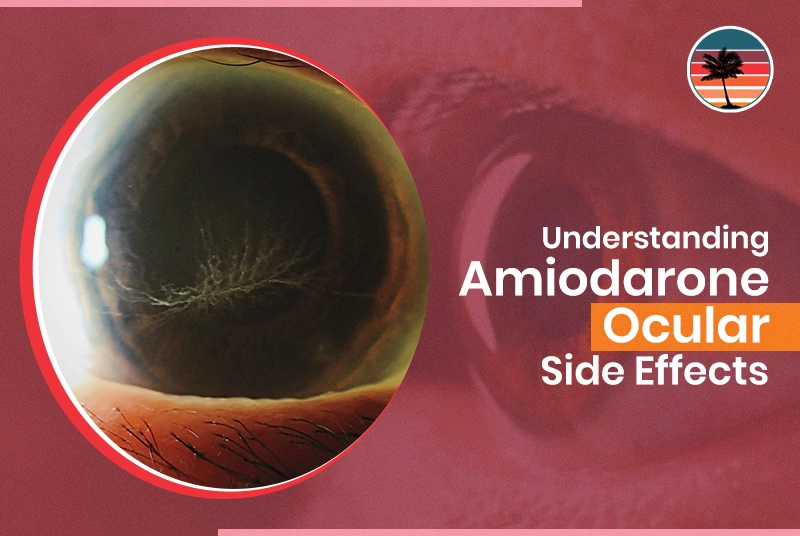
The most common eye problem associated with Amiodarone is corneal deposits, also called vortex keratopathy or corneal verticillata. These appear in 70 to 100 percent of patients who take Amiodarone long-term. The deposits form a whorl-like pattern on the cornea that resembles cat whiskers.
Most patients do not notice these deposits since they do not affect vision. Some people see colored rings around lights, however. This occurs in 1.4 to 40 percent of people. Less than 5 percent of patients experience glare or halos. These deposits are usually visible to doctors during a slit-lamp eye exam.
-
Changes in the Lens
Amiodarone may also lead to lens opacities, which occur in 50 to 60 percent of patients. Similar to corneal deposits, these lens changes usually do not impede vision. Patients can safely remain on the drug even with these deposits.
-
Other Common Issues
Another common complaint of patients on Amiodarone is eyelid irritation. This drug can make eyelid skin sensitive to sunlight, an adverse effect that occurs in 10 to 15 percent of patients. Some patients have also reported dry eyes, though this is less common.
Serious Eye Side Effects
-
Optic Neuropathy
The most serious eye complication of Amiodarone is optic neuropathy, wherein the optic nerve is damaged. This is a rare condition that occurs in only 0.36 to 2 percent of patients. However, it can lead to permanent vision loss or even blindness.
Optic neuropathy can affect one or both eyes. It may develop suddenly or slowly over time. Up to one-third of patients with this condition show no symptoms at first. Others notice blurred vision, trouble seeing colors, or gaps in their visual field.
Amiodarone blocks normal nerve function, which can cause the swelling of the optic nerve to persist. Because Amiodarone remains in the body up to 100 days, and even longer in some tissues, the damage can continue to worsen even after the medication is discontinued.
How does Amiodarone affect the Eyes?
Amiodarone accumulates in the eye’s tissues due to its high fat solubility and strong tissue binding. The drug enters the tears and deposits on the cornea, forming the typical whorl patterns.
In optic nerve damage, Amiodarone blocks the normal flow of materials through the nerve fibers. This causes swelling in the optic disc that persists as long as the drug interferes with nerve transport. The medication may also widen blood vessels, possibly causing oxidative damage to the optic nerve.
-
Risk Factors and Monitoring
Regular ophthalmic examinations are essential for early detection in patients receiving Amiodarone. Patients with preexisting ophthalmic disorders or other risk factors may be at higher risk of developing serious side effects.
Although corneal deposits and lens changes are generally benign, vision changes must be evaluated as soon as possible. Early diagnosis of optic neuropathy offers the best chance of preventing permanent vision loss.
-
Treatment Options
Most corneal deposits do not require treatment because they are not visually significant. Deposits tend to fade slowly after discontinuation of Amiodarone; however, the onset of fading may take many months because of the long half-life of the drug.
If optic neuropathy is developing, physicians must balance the benefits of Amiodarone for heart health against the risk of vision loss. Stopping medication may occasionally improve vision somewhat, but the damage may progress despite this. A decision needs to be reached after informed discussion among the patient, cardiologist, and eye physician.
RVAF – Your Vision, Our Mission
Amiodarone causes ocular side effects in the majority of patients; serious vision problems are rare. Corneal deposits are widespread but usually do not adversely affect vision and do not require cessation of the drug. Optic neuropathy is uncommon but serious and may cause permanent loss of vision. Regular eye exams help detect problems early and preserve long-term vision health.
Don’t let uncertainty about the amiodarone ocular side effects get in the way of the protection of your heart and your vision. Early detection is the key. Set up your comprehensive eye exam today and establish a baseline to track changes during the course of your amiodarone treatment. Your eyesight is too valuable to leave to chance.
At RVAF, we are committed to helping you see clearly and live confidently. Our expert team understands the unique challenges of medication-related eye conditions It provides personalized care tailored to each patient’s needs. Make an appointment on our website today, or speak with one of our specialists about ways to protect your vision while managing your heart health.
Frequently Asked Questions
1. What are the most common ocular side effects of amiodarone?
Common adverse ocular reactions include formation of corneal deposits, seeing halos around lights, blurring of vision, and increased sensitivity to light. Most corneal changes have little effect on vision.
2. Should patients taking amiodarone have regular eye examinations?
Yes. Eye examinations are advisable for patients under amiodarone therapy for an extended period, owing to possible damage to the retina, cornea, and optic nerves.
3. Can amiodarone cause optic neuropathy?
Yes, it has been reported that amiodarone use has been linked to cases of optic neuropathy. The symptoms include blurring of vision, loss of visual acuity, or a decrease in the visual field.
4. Can amiodarone-related eye problems be treated?
There are several eye side effects that improve once the drug is adjusted or withdrawn by the doctor. The early detection by a retinal specialist could avoid vision complications.