Cataract surgery is among the most common and safest of eye surgeries in the world. Millions of people undergo this surgery each year to see again. The results are typically excellent. But like any surgical procedure, it does have some risks.
One of the uncommon but serious side effects is retinal detachment. In this blog, we will discuss retinal detachment, why it may occur following cataract surgery, and what to look out for. Whether you are a patient or a medical professional, this guide will assist you in understanding the process.
What Is Retinal Detachment?
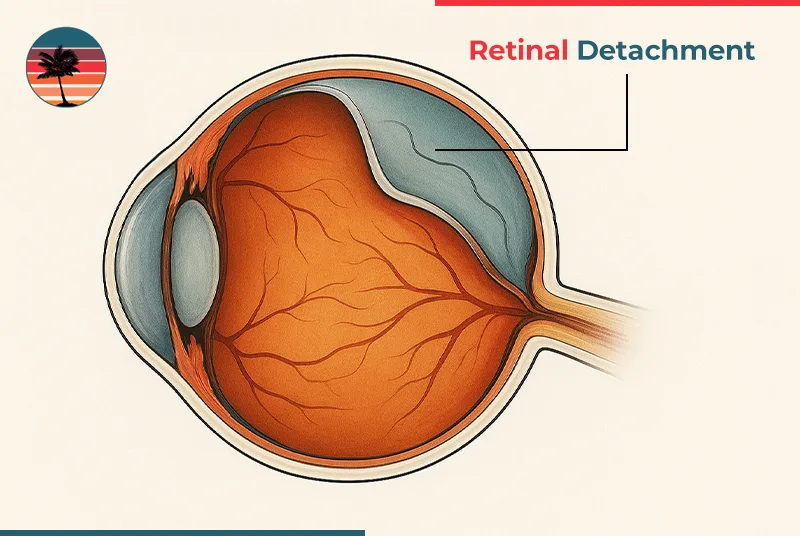
Retinal detachment refers to the detachment of the retina from the posterior segment of the eye. The retina, a thin tissue, is the sensory organ for light and visual transmission of messages to the brain. When detached, it does not receive any blood supply. Thus, its function is lost.
Thus, there are three general classifications:
- Rhegmatogenous: Because of a tear or rupture within the retinal tissue.
- Tractional: Caused by scar tissue pulling the retina
- Exudative: Due to fluid accumulation beneath the retina
This is a severe disorder. If not treated early, it could lead to irreversible blindness.
How Cataract Surgery Works?
Cataract surgery involves removing a cloudy lens and replacing it with a transparent intraocular lens (IOL). The most widely practiced method now is phacoemulsification, a surgical procedure that employs ultrasonic vibrations to disintegrate the lens.
The process typically takes less than 30 minutes and has a quick recovery. Patients usually recover in a few days.
Can Cataract Surgery Lead To Retinal Detachment?
The short answer: Yes, but probably not.
Retinal detachment is an established but rare cataract surgery. The risk is between 0.7% and 1.5% in the post-surgery years. This implies that less than 2 out of every 100 individuals may develop complications.
Although rare, the danger is present and must be confronted.
Risk Factors for Retinal Detachment after Cataract Surgery
Some people show a high risk of retinal detachment after cataract surgery. These include:
- Severe nearsightedness (high myopia)
- Previous eye trauma or surgery
- A family history of retinal detachment
- Age (under 60 years old increases risk)
- Complications during surgery, like a torn posterior capsule
Recognizing these risk factors enables doctors to monitor closely high-risk patients post-surgery.
Signs and Symptoms to Look For
Retinal detachment can happen days, months, or years after cataract surgery. It can start with prodromal symptoms, such as:
- Sudden episodes of light (particularly in peripheral vision)
- Abrupt rise in floaters
- A shadow or drapery that moves across your field of vision.
- Distorted vision or loss of peripheral vision
If you experience any of these symptoms, get immediate emergency eye care. Treatment can save your vision. To learn about post-procedure healing, read what to expect after laser surgery for a retinal tear for guidance on recovery and symptoms to monitor.
Preventive Measures and Post-Operative Care
Although you can’t always avoid retinal detachment, correct follow-up care reduces your risk. Here’s what you can do to help:
- Take all follow-up tests after surgery.
- Avoid trauma or excessive lifting to the eye during the initial weeks
- Inform your doctor if you experience high myopia or previous eye issues
- Watch out for warning signs, particularly if you’re at risk
Doctors should advise patients about these symptoms and risks before surgery.
Things to Do In Case Of Suspected Retinal Detachment
If you think you have a detached retina, don’t delay. Visit an eye doctor or go to the emergency room immediately.
Treatments are:
- Laser surgery to fix retinal tears
- Vitrectomy is an operation that removes the gel of the eye
- Scleral buckle, in which a thin band is employed to advance the eye wall forward towards the retina
These work best if done at an early stage.
Get Professional Retinal Health Care in Florida
Cataract surgery is safe and life-changing for the overwhelming majority of patients. However, retinal detachment is a potential complication that may occur, especially in high-risk patients.
If you’re having cataract surgery or already have, remain vigilant. Be aware of the symptoms, attend follow-ups, and don’t ignore vision changes.
Early treatment may preserve your vision.
If you have recently had cataract surgery and are experiencing any unusual vision symptoms, Retina-Vitreous Associates of Florida (RVAF) is here to help. Their board-certified retina specialists provide exceptional diagnosis and cutting-edge treatment for retinal detachment and other serious eye problems.
RVAF is known statewide by patients and referring physicians for its many locations across Florida, timely appointment scheduling, and respected reputation for quality care.
Book your appointment today at RVAF.com.
Frequently Asked Questions
Q: How Prevalent Is Retinal Detachment Following Cataract Surgery?
This condition occurs in approximately 0.7% to 1.5% of patients, typically in the initial years following surgery.
Q: In How Many Days Following Cataract Surgery Can Retinal Detachment Happen?
The event may be several days, months, or years following the procedure.
Q: Is Laser Cataract Surgery Associated With Retinal Detachment?
Yes, the risk persists, though laser surgery can reduce some complications.
Q: Is Retinal Detachment Permanent?
Not always. If attended to early enough, it is generally possible to regain vision. Delay in treatment may lead to permanent blindness.