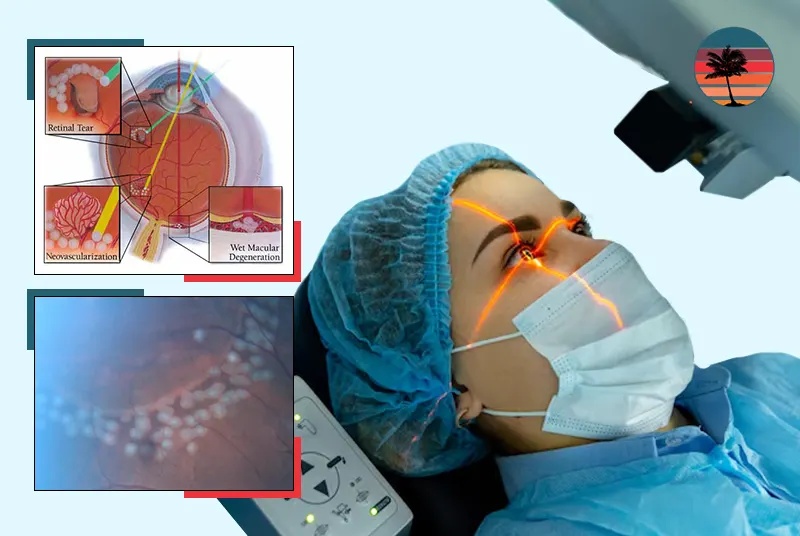
A retinal tear is a serious eye condition. Left untreated, it can lead to retinal detachment and permanent visual loss. Laser surgery, also known as laser photocoagulation, is often used to treat these tears quickly and effectively.
If you’re wondering what to expect after laser surgery for retinal tear, understanding the healing process can help reduce anxiety and improve recovery outcomes. It is important for the individual or their loved ones undergoing this therapy to know what to expect in recovery. This guide will outline the recovery process, symptoms, and tips for the best recovery.
What Is A Tear In The Retina, And How Are They Treated?
The retina is a thin layer of tissue toward the back of the eye. It detects light and transmits information to the brain to enable vision.
Detachment of the retina can happen when the jelly-like material inside the eye, the vitreous, pulls away or shrinks. This becomes increasingly prevalent as people age.
Laser surgery involves a light beam creating small burns around the tear. The burns create scar tissue that will “weld” the retina back into place and prevent further detachment. The procedure is performed in the office and typically takes only a few minutes.
What Occurs Immediately Following Surgical Procedures?
Most patients are sent home on the day of laser surgery. The eye does not need to be patched, and no sutures are required. Patients can notice:
- Mild eye pain or discomfort
- Temporary visual loss for several hours.
- Light sensitivity
- Floaters (specks or lines in your vision)
These are normal symptoms that will resolve in a matter of days. To make you comfortable, your doctor may give you anti-inflammatory or lubricating drops for your eyes.
Retinal Tear Recovery Timeline: What to Expect?
Healing from laser surgery for a retinal tear is generally quick. Here is a rough idea of what to anticipate:
First 24–48 Hours:
- Vision can be unfocused.
- You may notice increased floaters or flashes.
- Rest your eyes whenever you can.
First Week:
- Avoid heavy lifting, bending, or strenuous exercise.
- Vision should slowly improve.
- Attend your follow-up appointment.
After 1–2 Weeks:
- Most people return to normal daily activities.
- Floaters should still be there, but reduce them.
- Healing continues, but the optimal effect of the laser may take up to a maximum of 4 weeks.
Tip: Always follow your doctor’s advice about returning to work, driving, or flying.
Vision Changes Following Laser Eye Surgery
Vision can be unstable for a week or two or several days. You may have:
- Temporary blurry vision
- Increased floaters
- Photoreceptive sensitivity
These are all part of the healing process. But if your vision worsens, you notice a curtain-like shadow, or you experience an acute onset of floaters, you need to call your eye doctor right away. These are indications of retinal detachment, which requires emergent care.
Potential Risks and Circumstances for Consulting Your Doctor
Laser surgery is safe, but like all medical treatments, it involves some risks. Watch out for:
- Worsening vision
- Severe eye discomfort
- Continuous flashes of light
- New or increasing floaters
- Partial vision loss in your area of vision
These symptoms may indicate that the retina is detaching or that infection or bleeding is present. Don’t wait—get help right away if you experience any of these symptoms.
Instructions for a Safe Recovery
- Follow all post-op instructions.
- Avoid heavy lifting and straining.
- Use sunglasses to reduce light sensitivity.
- Apply eye drops as directed.
- Keep all follow-up appointments as scheduled.
- Safeguard your eyes from damage.
Also, live a healthy lifestyle. Drink plenty of water, eat foods rich in vitamins A and C, and don’t smoke. These steps can improve your overall eye health.
Require Expert Retina Treatment? Contact Retina-Vitreous Associates of Florida
Laser repair of a retinal tear is a fast and efficient way to avoid developing more severe ocular complications. Knowing what to anticipate following surgery can enable a more assertive recuperation process. Adhere to your physician’s recommendations, rest as needed, and observe closely for complications.
If you experience sudden vision changes, don’t wait—contact your eye care professional. The sooner you are treated, the better your chance of preserving your vision.
Retina-Vitreous Associates of Florida (RVAF) offers specialty treatment for retinal detachments, tears, and other complicated eye disorders by our board-certified retina specialists. They utilize the latest diagnostic technologies and state-of-the-art treatment modalities to protect and preserve your visual functions.
RVAF, with its many locations throughout Florida and staff trusted by thousands of patients and referring ophthalmologists alike, is there when you need help with your eyesight.
To schedule an appointment, visit rvaf.com today or call to discuss with a care coordinator.
Frequently Asked Questions
- How long does it take to recover?
Recovery is usually 1–2 weeks in most individuals. The retina stabilizes fully in a month.
- Can I drive after laser eye surgery?
Not immediately. Wait until your vision returns and your doctor instructs you it is safe to do so.
- Is the process painful?
You will get a little sting or burning sensation during the laser, but the majority of patients handle it fine. Pain afterward is generally not a problem.