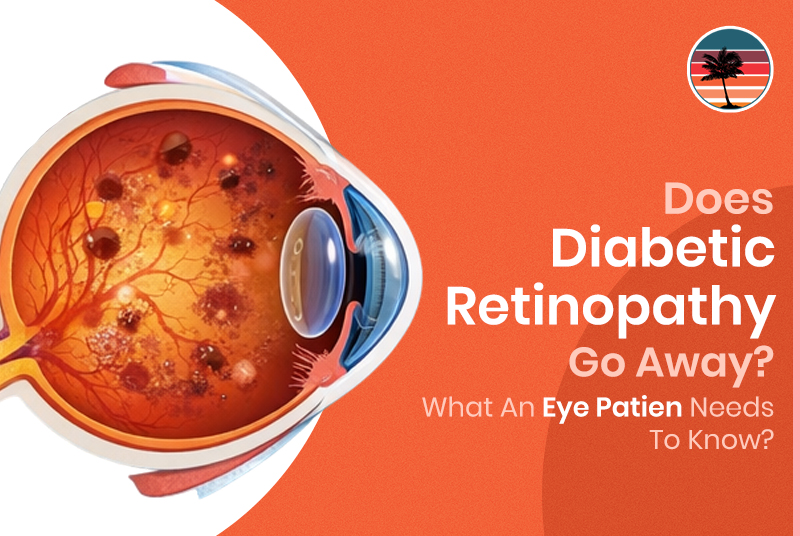
Is diabetic retinopathy go away? No, never. Unfortunately, once it appears, it is a lifelong eye disease. However, early intervention may halt the progression over time.
The analogy you may think of here is that of a fragile orchard, the retina. Diabetes, which elevates blood glucose levels, has lifelong consequences.
40% of people with diabetes will develop retinopathy. However, there are still choices you can make over such a high percentage.
What Is Diabetic Retinopathy?
Diabetic retinopathy is an eye disease that affects the small blood vessels in your retina. Your retina is the tissue lining the back of your eye that is sensitive to light, and it sends messages to your brain so you know what you are seeing.
When your blood sugar is high, it weakens these small blood vessels. Sometimes they swell and exude fluid, while on other occasions they close off completely. The body then attempts to generate new vessels, but these are also weak and cause additional problems.
This is a slowly progressive disease, and many individuals will not experience any symptoms in the early stages. This underscores the importance of routine eye examinations. Often, by the time a vision change occurs, substantial damage may already have happened.
The Truth: Does Diabetic Retinopathy Go Away?
Diabetic retinopathy is an irreversible condition. It will never go away or get better. Once your retinal blood vessels are damaged, they cannot return to their original state.
When damage occurs to your blood vessels, they have long-term effects. It’s the same idea as a twig breaking off a tree branch. You can support it and prevent further deterioration, but the damage persists.
However, “permanent” doesn’t mean “irrevocable”. Treatment can halt disease progression. Early symptoms, such as mild swelling, can be alleviated by controlling blood glucose levels. Some amount of vision loss can be corrected or at least maintained with treatment.
There is no way to make diabetic retinopathy go away, but you can prevent its effects.
The Four Stages of Diabetic Retinopathy
Knowing which stage you are in will help you and your doctor plan the most appropriate treatment for you.
1. Mild NPDR
Small swellings (microaneurysms) form in the retinal blood vessels. Small amounts of fluid may leak. Usually, people have no symptoms. You will require monitoring at 6-12 months intervals.
2. Moderate NPDR
The blood vessels swell and get blocked. Fluid may cause the macula to swell, causing slightly blurred vision. You will require monitoring at 6- to 8-month intervals.
3. Severe NPDR
Even more blood vessels get blocked. The retina becomes deprived of blood, causing blurred vision and dark spots or patches where vision disappears. The risk of permanent vision loss is high. You will require monitoring at 3-6 months intervals.
4. PDR
New abnormal blood vessels grow along the retina into the clear gel that fills your eye. They are prone to bleeding. Scar tissue can cause the retina to peel away (retinal detachment). This can be irreversibly blinding. You require urgent specialist treatment.
Treatment Options: Your Path Forward
Although you can’t fully cure diabetic retinopathy, established treatments can help preserve your vision and halt its progression.
1. Blood Glucose Control (First Line of Defense)
Keeping your blood sugar under control is crucial. Tight control can slow or halt disease progression. Collaborate with your healthcare team for proper management. Regularly check your A1C levels. Think of maintaining healthy blood sugar levels as taking care of your garden: consistent attention prevents problems before they arise.
2. Laser Treatment (Photocoagulation)
Laser treatments target and seal irregular blood vessels and induce regression of abnormal new vessels. This intervention is most effective for stage 3 and 4 diabetic retinopathy. It helps prevent bleeding and reduces the risk of vision loss. Laser treatments cannot restore eyesight that has already been lost; they can only prevent further deterioration.
3. Anti-VEGF Therapy
These eye injections inhibit a growth factor that promotes the development of abnormal blood vessels. The anti-VEGF agents are administered directly into the eye. These treatments alleviate macular swelling and can enhance vision. Most patients will need ongoing injections to retain the benefit.
4. Surgical Intervention (Vitrectomy)
A vitrectomy is a surgical procedure that removes blood and scar tissue from the vitreous chamber and replaces them with a clear buffer solution. A vitrectomy is effective in end-stage diabetic retinopathy with severe bleeding or detachment of the retina. After a few weeks of recovery, a vitrectomy maintains remaining vision.
5. Changing your lifestyle
Your choices every day have an effect. Maintaining a stable blood pressure can prevent hypertension from accelerating retinal damage. Incorporating nutritious foods that support eye health, such as dark, leafy greens and omega-3 fatty acids, can help. Regular physical activity helps control high blood pressure and high blood sugar. Quitting smoking decreases blood vessel constriction and counteracts diabetic retinopathy.
Why Early Detection Changes Everything?
Diabetic eye exams protect sight. Diabetic retinopathy in the early stages is highly treatable. At stages 1 or 2, strict sugar control may halt progress.
Most people get diabetic retinopathy 5 to 15 years after diagnosis of diabetes mellitus. Studies have shown that for moderate nonproliferative diabetic retinopathy, the risk of progression is 3 times higher in 5 years.
Many patients with early diabetic retinopathy have no symptoms. You cannot depend on how your eyes “feel”; only a thorough dilated eye examination can show the accurate picture.
Living With Diabetic Retinopathy: What You Can Control?
Get regular eye exams as recommended by your doctor. Control your diabetes-eat well, check blood sugar, take your medication, and keep your A1C under control.
Develop a partnership with your retina specialist for your care. Ask questions, voice concerns, and follow their recommendations.
Know what to watch for-certain symptoms signal the need to call your doctor right away. Sudden changes in vision or the appearance of floaters or black spots require immediate attention. Caring for your eyes can save your sight.
Your experiences of sight did not end with the diagnosis. We make dozens of choices every day. Choose action over worry. Choose care over neglect.
When to See a Retina Specialist?
Seek a retina specialist immediately if you have any of the following:
-
Any sudden vision changes or loss
-
New floaters or spots
-
Blurred or crooked vision that persists
-
A black curtain or veil over your visual field
-
Flashes of light
If you have diabetes, you should have screening eye care even if you have no symptoms. You should undergo yearly comprehensive eye examinations, beginning at the time of diabetes diagnosis.
Guiding Your Vision Journey with Expert Care
Does diabetic retinopathy go away? No. But it is something that can be managed and cared for. Early detection, intervention, and blood sugar control can preserve your vision.
You have more control than you realise. Regular eye exams can detect problems before you notice. Advances in medicine can halt further damage. Minor lifestyle adjustments can improve your overall health because each intervention preserves your vision.
Partner with experienced retina specialists who know how to work with you. The trained retina specialists and staff at Retina-Vitreous Associates of Florida are dedicated to your care.
Call today to set up your retina assessment. The best clear vision begins with one call.