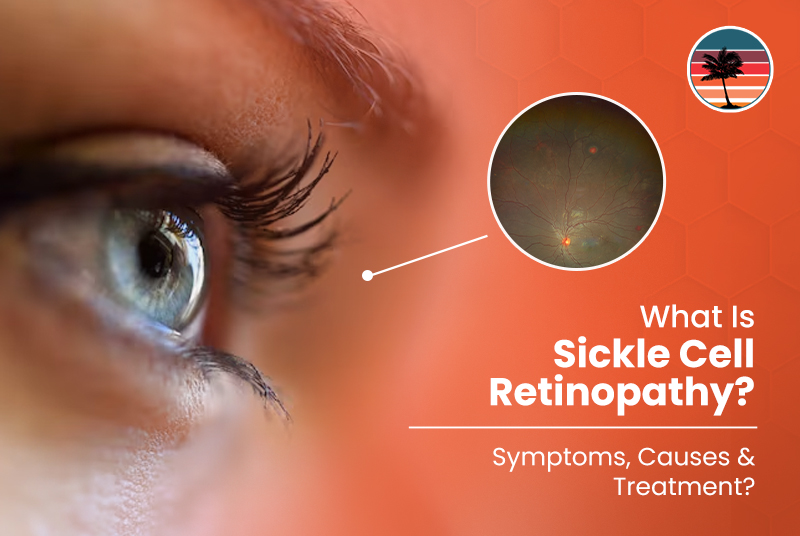
If you are living with sickle cell disease, you deal with more than just blood issues. Sickle cell can also harm the blood vessels at the back of your eyes where light lands on your retina. Because sickle cell retinopathy can develop without noticeable symptoms, you may not know your retina needs attention until an eye examination detects a problem.
You might be curious whether sickle cell disease affects vision and what warning signs might make you think your eyes are not getting the care they need. How often do you need to have your eyes checked? If you are experiencing abnormal growth in your blood vessels, what kind of care can you expect?
The good news is that regular eye screenings can alert you to these problems before they lead to vision loss. Therefore, in this blog post, we will dive deep into sickle cell retinopathy: what it is, what signs to watch for, how eye doctors can detect it, and what to do if retinopathy has formed.
What Is Sickle Cell Retinopathy?
Instead of diving in, you should first understand how sickle cell disease affects the blood supply to your retina.
Sickle cell retinopathy is a sickle cell disease-related problem with the retina. Sickle-shaped red blood cells can obstruct small retinal blood vessels and reduce blood flow to parts of the retina. This blockage limits oxygen supply to the retina, leading to abnormal retinal vessel development, ischemia, bleeding, and other retinal changes.
Most patients with sickle cell retinopathy present without having symptoms. Changes can be identified by a dilated retinal exam even before you realize there is a problem.
That is why consistent retinal monitoring is important, even when your vision seems to be normal.
What Causes Sickle Cell Retinopathy?
The retina requires a constant blood supply. Sickle cell disease can disrupt that blood flow and result in retinal ischemia.
If abnormal red blood cells block small vessels in the retina, some areas of the retina might not get enough oxygen. The retina may grow abnormal new blood vessels in response. These vessels might bleed, or form scar tissue that pulls on the retina.
Several retinal changes can occur:
• Retinal blood vessels are blocked or narrowed
• Reduced retinal blood flow
• Retinal ischemia
• Retinal thinning
• Abnormal blood-vessel growth
• Retinal bleeding
• Scar tissue formation
• Retinal traction or detachment that occurs with advanced disease
The severity of retinal involvement varies from person to person and can depend on factors such as sickle cell genotype and individual retinal findings.
What Are the Symptoms of Sickle Cell Retinopathy?
For many people, there are no obvious signs in the early phases, which is why screenings are critical. The signs and symptoms of retinopathy often develop late in the course of this disease and can include:
• Flashes of light
• Eye floaters (blurry, shadowy spots in your vision)
• Blurred vision
• Blind spots
• Peripheral vision loss
• Sudden changes in vision
• A shadow or “curtain” hanging over the field of vision
Not all of these eye symptoms necessarily mean retinopathy has advanced due to sickle cell disease, as they can occur with other vision impairments.
However, you should still see a doctor as soon as you notice any sudden or new changes to your vision. Pay especially close attention if any of these new symptoms occur with flashes of light, a curtain, or many new floaters in your eye.
What Are the Stages of Sickle Cell Retinopathy?
Physicians typically classify sickle cell retinopathy as Nonproliferative Sickle Cell Retinopathy. Understanding this distinction clarifies why one patient might require observation, and another medical treatment.
Nonproliferative Sickle Cell Retinopathy
However, Nonproliferative disease can cause retinal vascular occlusion and areas of retinal nonperfusion. Still, the abnormal blood vessels do not increase.
If a retina specialist notices symptoms of non-proliferative disease, they will look for the following:
• Retinal vascular changes.
• Retinal ischemia.
• Retinal hemorrhages.
• Retinal thinning.
• Other evidence of poor retinal perfusion.
Your central vision could be fine despite any changes in your retina.
Proliferative Sickle Cell Retinopathy
It is an active process called proliferative disease. Abnormal vessels grow on the retina when the tissue is not receiving enough oxygen.
Sea fan neovascularization is a specific type of vessel growth you might see; these vessels are very fragile and can bleed into the vitreous, form scar tissue, and cause traction on the retina.
This stage of the disease carries the most risk for severe vision-threatening complications.
Does Sickle Cell Genotype Affect Retinal Risk?
Depending on the type of sickle cell disease you have, you may be more at risk for serious vision problems. Some patients with HbSC sickle cell disease can have serious eye disease even though other symptoms of systemic sickle cell disease are not severe.
Your retina doctor will evaluate your sickle cell genotype as well as your age, eye examination findings, health history, and history of vision complications to determine the appropriate eye-screening schedule.
How Is Sickle Cell Retinopathy Diagnosed?
Because early sickle cell retinopathy may cause no noticeable symptoms, regular retinal screening plays an important role in diagnosis.
• Dilated Retinal Examination
Your doctor will dilate your eyes and look at the retina for possible ischemia (lack of oxygen) and changes like new blood vessels, bleeding, and so on.
• Ultra-Widefield Retinal Imaging
Ultra-widefield imaging offers a wide range of vision that spans the full retina. This allows physicians to visualize areas in the periphery of the retina that can include sickle cell changes.
• Fluorescein Angiography
Fluorescein angiography involves injecting a fluorescent dye and imaging the retina with a special camera to analyze blood flow and identify sources of retinal ischemia and neovascularization.
• OCT and OCT Angiography
OCTs deliver cross-sectional OCT images of retinal layers. OCTs can diagnose structural changes and thinning of the retina.
OCT angiography images retinal blood vessels without dye injections, as with fluorescein angiography.
Can Sickle Cell Retinopathy Cause Retinal Detachment?
Advanced sickle cell retinopathy can cause serious retinal complications, including vitreous hemorrhage, retinal traction, and retinal detachment.
In some advanced cases, abnormal blood vessels grow, and these, along with scars, can pull on your retina – and the pulling (traction) can result in retinal detachment.
Tears and bleeding in the retina also result in significant vision loss. Contact your ophthalmologist immediately if you have:
• Rapid onset floaters
• Flashing light, such as lightning-like flashes
• A dark curtain or shadow across the field of vision
• New peripheral vision loss
• Sudden or significant vision loss
Please do not wait for symptoms to resolve on their own.
When Should You See a Retina Specialist?
Sickle cell retinopathy may not have any obvious signs. That is why regular retinal screenings are so important. If your vision changes suddenly, you should also have it checked by a retina specialist right away.
The appearance of a new floater, flash, blind spot, change in your field of vision, or the sensation of seeing a shadow across your vision should be attended to quickly as a potential retinal complication.
A retina specialist can examine your retina and blood flow, assess the structures of the retina, and advise whether observation or treatment is necessary.
Sickle Cell Retinopathy and Other Retinal Vascular Conditions
Sickle cell retinopathy is one form of retinal vascular disease. Many different blood-vessel disorders in the retina can interfere with blood flow, resulting in bleeding, swelling, or the growth of new, abnormal blood vessels.
If retinal vascular disorders are something you are researching, you can find more information about retinal vein occlusion (RVO) here, as well as learn how blocked retinal blood vessels can lead to visual disturbances.
Knowing how these conditions differ will help you with any discussions you want to have with your ophthalmologist.
Retina Vitreous Associates of Florida — Specialized Retinal Care for the Vision You Depend On
Retinopathy may affect your retina before you notice any changes in your vision. Frequent retinal exams allow your doctor to check for changes in retinal blood flow, abnormal vessel development, bleeding, and other issues.
Schedule a thorough retinal screening exam if you have sickle cell disease and are due for this screening, or have experienced sudden floaters, flashes, blind spots, or changes in your vision by calling the eye care professionals at Retina Vitreous Associates of Florida today.
Specialized retinal care focused on protecting the vision you depend on.