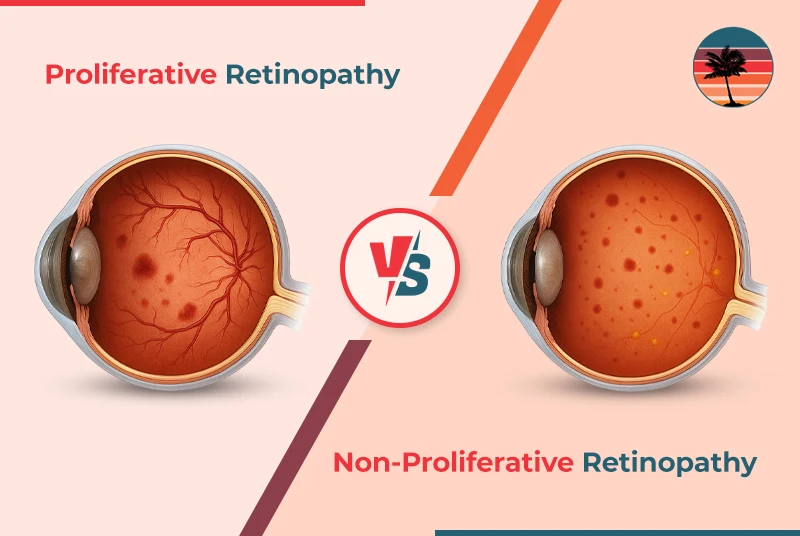
Did you know that diabetic retinopathy is one of the leading reasons for adult blindness? Diabetic retinopathy is a serious eye disease that can affect individuals with diabetes. Diabetic retinopathy comes in two types: proliferative and non-proliferative. The two retinopathies affect the retina, but each has a different severity and treatment.
In this blog, we will discuss the primary differences between proliferative and non-proliferative retinopathy so you are aware of the treatments and risks for both.
What is Retinopathy?
Retinopathy is an injury to the retina, the light-sensitive tissue at the rear of the eye. It usually occurs as a consequence of diabetes, hypertension, or other disease.
In diabetic retinopathy, elevated blood glucose damages the blood vessels of the retina, resulting in a compromised blood supply, which causes vision problems.
There are two general categories: proliferative and non-proliferative diabetic retinopathy. Understanding these differences is important to prevent blindness.
Understanding Non-Proliferative Retinopathy (NPDR)
Non-proliferative retinopathy (NPDR) is the initial stage of diabetic retinopathy. In this, the retinal blood vessels get damaged, but new, abnormal blood vessels have not yet begun to develop.
Steps of NPDR:
- Mild NPDR: Small spots where fluid seeps through the retina, with little effect on vision.
- Moderate NPDR: Greater damage to the blood vessels and some retina swelling might occur.
- Severe NPDR: Extensive damage to the retina. Swelling or leakage of fluid may occur, causing blurred vision.
Signs of NPDR:
- Blurred vision
- Floaters or spots in your eye
- Night blindness
NPDR will not produce large vision issues initially, but it has the potential to worsen and cause serious eye complications if left untreated.
Treatment of NPDR:
- Monitoring regularly is important. In most instances, NPDR can be controlled by balancing blood sugar levels and leading a healthy lifestyle.
- Patients can require laser treatment for severe NPDR to avoid damage.
Patients should also learn about diabetic retinopathy prevention and treatment to avoid disease progression.
Understanding Proliferative Retinopathy (PDR)
Proliferative diabetic retinopathy (PDR) is a more severe form of diabetic retinopathy. It occurs when the retina is not getting enough oxygen and forms new and abnormal blood vessels. The new vessels are fragile and can bleed into the eye.
Symptoms of PDR:
- Sudden vision loss
- Dark spots or floaters in the eyes
- Distorted vision
PDR is a far more serious condition than NPDR. The new vessels are extremely fragile and can easily break, resulting in retinal detachment or glaucoma. If left untreated, this can result in permanent blindness.
Treatment of PDR:
- Laser therapy (pan-retinal photocoagulation): This is used to make abnormal blood vessels smaller or to close them.
- Vitrectomy: In severe cases, surgery may be needed to remove blood from the eye and repair retinal damage.
- Anti-VEGF injections: Anti-VEGF injections prevent the formation of new blood vessels. For more information, check how intravitreal therapy is revolutionizing the treatment of retinal disorders.
Key Differences Between Proliferative and Non-Proliferative Retinopathy
Let’s examine the most significant differences between proliferative and non-proliferative retinopathy:
The sole difference is that PDR is a new vessel formation, whereas NPDR is damage to the pre-existing vessels.
|
Feature |
Non-Proliferative Retinopathy (NPDR) |
Proliferative Retinopathy (PDR) |
|
Progression |
Early stage; may not cause severe vision loss |
The advanced stage; can lead to significant vision loss |
|
Blood Vessel Changes |
No new blood vessels; existing vessels leak |
New, fragile blood vessels grow, often leaking blood |
|
Vision Impact |
Blurry or distorted vision, but typically manageable |
Sudden vision loss or serious visual distortions |
|
Treatment |
Blood sugar control, laser treatment |
Laser therapy, vitrectomy, anti-VEGF injections |
Risk Factors and Prevention
A lot of factors can increase the likelihood of developing diabetic retinopathy. Both types of retinopathy share the same risk factors, including:
- Poor control of blood sugar: Elevated blood sugar levels destroy the blood vessels in the eye.
- Hypertension: Increased blood pressure may aggravate the effect of retinopathy.
- High cholesterol: This may increase the risk of blood vessel damage.
- Tobacco smoking: Tobacco smoking damages blood vessels and increases the risk of eye disease.
Maintaining a healthy lifestyle can greatly reduce the risk of diabetic eye diseases. Learn more about diabetic retinopathy prevention and treatment to keep your vision protected.
Prevention Tips:
- Regularly measure blood glucose levels.
- Control blood pressure and cholesterol using medicines and life modifications.
- Stop smoking to reduce the likelihood of issues.
- Regular eye tests to detect retinopathy early.
- Treatment and Management of Retinopathy
- Treatment of retinopathy is based on the stage and type of the disease.
- Non-proliferative Retinopathy (NPDR): NPDR in its early stages can be treated with close observation, regulation of blood glucose, and frequent eye check-ups. With advanced stages, laser surgery is needed to avoid further damage.
- Proliferative Retinopathy (PDR): PDR in advanced stages typically requires more aggressive treatment, such as laser treatment, surgery (vitrectomy), and anti-VEGF injections to inhibit the formation of new blood vessels.
Timely treatment can delay the disease and help save vision.
When Should We Visit A Physician?
If you notice any variation in your vision, you need to consult a doctor. The following are some of the symptoms to watch out for:
- Unsharp or blurred vision
- Sudden loss of vision or black spots
- Difficulty seeing at night
- Noticing floaters or flashes in your eyes
Even if you feel fine, diabetics must check their eyes at least once a year to detect early signs of retinopathy.
Learn More About Your Eye Health at RVAF
To protect your eyes, it is best to learn the difference between proliferative and non-proliferative retinopathy, particularly if you are diabetic. Non-proliferative retinopathy may be treated with lifestyle changes and early detection, but if treated late, proliferative retinopathy may result in total and permanent loss of vision.
Your vision matters. Don’t wait until it’s too late. If you or someone you know may have diabetic retinopathy, call today to schedule a comprehensive eye examination with the experienced staff at Retina-Vitreous Associates of Florida.
Their staff of experienced eye doctors is ready to assist you in maintaining your sight and guide you through every step of eye examination, treatment, and ongoing care. Schedule your appointment today and start the journey to healthier eyes.
Frequently Asked Questions
What Are The Stages Of Non-Proliferative Diabetic Retinopathy?
There are three degrees of non-proliferative retinopathy: mild, moderate, and severe. The more damaged vessels are, the more severe they are.
Can Non-Proliferative Retinopathy be transformed into Proliferative Retinopathy?
Yes, unless NPDR is managed, it may advance to proliferative retinopathy. During this stage, new vessels form and can cause serious problems.
What is proliferative diabetic retinopathy treated with?
The management of PDR involves laser surgery, vitrectomy, and anti-VEGF injections to halt the progression and vision loss.
What is the prognosis of a person with proliferative retinopathy?
If left untreated, PDR can lead to blindness. Yet, if treated early, vision loss may be reduced or halted.
How frequently should individuals with diabetes undergo eye examinations?
Diabetics require a full eye exam every year. If retinopathy is detected, they may be requested to be examined more frequently.