You woke up and knew something wasn’t right. A cluster of dark floaters. A flicker of light in your peripheral vision. Your vision is different from the day before.
You brushed it off-too much screen time, too little sleep.
But the feeling lingered: What if there’s something wrong with my eyes?
That feeling of dread is worth paying attention to. Thousands of people go blind each year, not because treatment doesn’t work, but because it was started too late. They assume their eyes will fix themselves.
They don’t. The retina does not regenerate like skin or bone. Once it’s damaged, it cannot heal; it’s gone. And the damage to the retina doesn’t wait until you decide treatment-it happens quickly, and silently.
By the time people become aware of their condition, it’s too late to prevent permanent vision loss.
But if you see symptoms early enough, doctors can use tools that can arrest the disease process and prevent further vision loss.
So, before you dismiss that cluster of floaters, read this.
What Is the Retina?
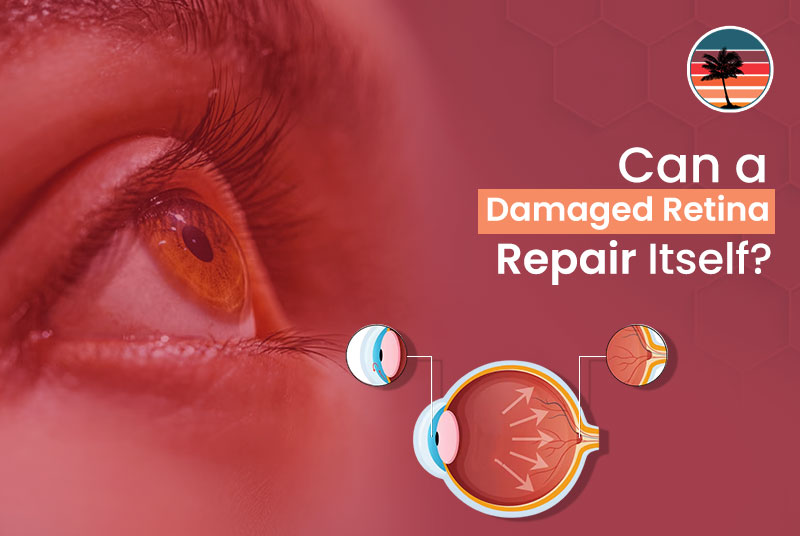
The retina is a thin sheet of tissue located at the back of the eye. Millions of tiny light-sensitive cells called rod and cone cells are contained within it. These cells change the light you see into a signal that your brain can read.
No healthy retina. No clear sight. It’s that simple.
Why Can’t the Retina Heal Itself?
Almost all body tissues can repair themselves from minor damage. Retinal neurons cannot. There is nothing you can do to make the damaged neurons regrow or replace themselves.
Photoreceptors (the cells in your eye that detect light) are destroyed. Medicine cannot replace them.
Common Types of Retinal Damage
-
Retinal Detachment – The retina comes away from the wall of the eye—an eye-sight-threatening emergency.
-
Diabetic Retinopathy – High blood glucose damages retinal blood vessels. This is the leading cause of blindness among working adults.
-
Macular Degeneration – the macula (central retina) becomes damaged, resulting in blurred or absent central vision, mostly in adults over 50.
-
Retinal Tears – small breaks that can escalate to a total detachment if left untreated.
-
Eye Trauma – An injury to the eye can instantly tear or destroy retinal tissue.
Can a Torn Retina Heal on Its Own?
No, the retina cannot heal on its own after it has been torn. Fluid can pass through the tear and lift the retina off the wall of the eye. This is called retinal detachment and is a cause of blindness.
Do not delay-consult an eye doctor the same day.
What Happens If You Leave Retinal Damage Untreated?
And it will get better… Always. The retinal damage will not heal on its own. Without treatment, it will cause:
-
Blurred vision that gets worse
-
Loss of central and/or peripheral vision
-
Permanent loss of vision in the affected eye
Treatments for a Damaged Retina
The retina cannot repair itself. Doctors can help prevent further damage and save your eyesight. Treatment will vary depending on the type and severity of damage.
|
Treatment |
What It Does |
Best For |
|
Laser Therapy |
Seals retinal tears to prevent detachment |
Retinal tears |
|
Vitrectomy |
Surgical repair of the retina from inside the eye |
Detachment, advanced diabetic retinopathy |
|
Scleral Buckling |
A band pushes the eye wall against the detached retina |
Retinal detachment |
|
Pneumatic Retinopexy |
Simpler detachments |
|
|
Anti-VEGF Injections |
Blocks abnormal vessel growth in the retina |
Wet AMD, diabetic macular edema |
|
Cryopexy |
A freeze probe seals retinal tears |
Small retinal tears |
What’s Coming Next in Retinal Treatment?
The research is rapidly advancing. Researchers are testing stem cell therapies to replace damaged photoreceptors and gene therapies to halt the progression of inherited diseases.
Some research published in 2025 described a method to ‘reset’ non-functioning retinal cells, reawakening vision that had failed. None of this is commonplace yet, but it’s exciting for the next ten years!
Warning Signs — Act Immediately If You Notice:
-
Sudden new ‘floaters’ (dark dots or cobwebs) appear in vision.
-
Flashing lights (more so in a darkened room).
-
A dark shadow or curtain obscuring your vision.
-
Sudden blurring or distortion.
-
Sudden loss of vision in one eye.
These are signs that your retina is tearing or detaching; go to an emergency eye clinic, don’t wait for a routine appointment.
How to Protect Your Retina
-
Receive an annual dilated eye exam – several conditions are silent in their early stages.
-
Monitor and manage your blood sugar and blood pressure – uncontrolled diabetes is the preventable cause.
-
Wear UV-blocking glasses when outdoors.
-
Stop smoking-smoking makes AMD 4 times more likely to occur.
-
Consume lutein, zeaxanthin, and omega-3s through your diet-think leafy greens, eggs, and salmon.
-
Wear safety eyewear for sports or high-risk activities.
Your Eyes Deserve Expert Care — Right Now
A damaged retina will not repair itself; however, you are not helpless. The more you wait, the greater the chance of permanent vision loss. The more you do now, the greater chance you have of keeping your sight. Treatment can prevent, preserve, and even improve vision.
Do not sit and wait for conditions to deteriorate or for symptoms to worsen; it will cost you your sight.
At RVAF, specialists using state-of-the-art tools work to detect, diagnose, and treat retinal disease quickly. New, sudden-onset flashes of light, floaters, or any noticeable change in your vision should be addressed.
Book your appointment now at RVAF: “Your sight is worth seeing.”