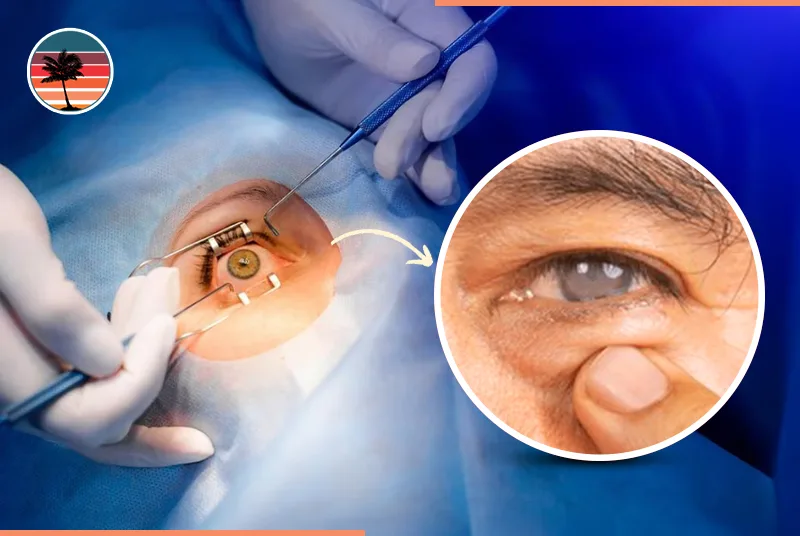
If you’re considering cataract surgery, you may wonder does cataract surgery get rid of floaters, especially when those pesky specks already interfere with daily vision. This is a reasonable question that deserves a simple answer.
The quick answer is: Cataract surgery rarely eliminates floaters. But there is more to this tale.
What Are Eye Floaters?
Eye floaters are small dots or threads that move in your field of vision. They are dark spots that are altered when you move your eyes. You may also notice wavy lines that appear to wriggle in your vision. Some individuals see cobweb shapes that develop and vanish from their field of vision. Others see ring-shaped things that move by.
These floaters are found in the vitreous humor, the clear, jelly substance that fills your eye. As you get older, the jelly deteriorates and becomes clumpy. These clumps cast shadows upon your retina, and that is what creates floaters.
When Floaters Are Normal?
Most floaters are harmless. Floaters are persistent in individuals over 50 years of age due to changes that occur in the vitreous with age. Individuals who are short-sighted will be more likely to notice floaters. If you have had a previous eye surgery, you are more likely to be at risk of developing floaters. Eye inflammation can also result in floaters.
What Are Cataracts?
Cataracts occur when the natural lens of your eye becomes cloudy. It is like trying to look out through a foggy window.
The lens is anterior to the vitreous. This is significant in understanding why cataract surgery cannot correct floaters.
How Cataracts Alter Vision:
Cataracts cause vision problems that gradually worsen. You may perceive things as blurry or indistinct, making it difficult to see them. Light is often too intense and unbearable for most individuals with cataracts. Driving at night is difficult due to inadequate night vision. Colors appear washed out or less vibrant than previously. Double vision in one eye is also likely to occur in some individuals.
Does Cataract Surgery Remove Floaters?
No, routine cataract surgery does not remove floaters.
That is why: The cataract surgery removes the cloudy lens and inserts a clear artificial lens. Only the portion of the lens is operated on by the surgeon. Floaters are in the vitreous behind the lens.
It’s like repairing your car’s front windshield when the issue is with the rear windshield.
Why Other Individuals Think Surgery Benefited Their Floaters
After cataract surgery, some patients experience a reduction in floaters. There are several reasons for this.
- Increased contrast occurs because your fresh, clear lens illuminates everything. That added illumination can make floaters harder to notice against the increased background illumination.
- Keener vision also helps. If your vision often improves significantly, you may notice fewer floaters that used to be annoying.
- A different focus is essential, too. You often feel happy about your better vision after surgery, so floaters feel less annoying next to your new, clear sight.
Rare Exceptions
Extremely rarely, some floaters are removed by a surgeon when a cataract is surgically removed. This can only be done if the floaters are near the operated-on lens. Floaters are occasionally troublesome and must be removed during surgery.
Occasionally, floaters are visible during cataract surgery and can be safely removed.
But this is not what cataract surgery tries to accomplish.
How Cataract Surgery Works?
Knowing the procedure explains why it will not fix floaters, though.
The Step-by-Step Process
The process begins with numbing your eye using special eye drops, so that your eye feels at ease. Next, the surgeon creates a small incision in the cornea. As the cloudy lens is removed, ultrasound technology shatters the cloudy lens into small pieces.
For the section of inserting the lens, a new artificial lens is inserted in the exact location where your original lens once was. Lastly, the healing process occurs as the small incision heals naturally without the need for stitches.
The surgeon never touches the vitreous where floaters reside.
Modern Treatment of Floaters
If floaters bother you, specific treatments are available.
1. Vitrectomy Surgery
This operation removes the vitreous gel and the floaters within it.
The procedure operates as follows: The physician makes small incisions in the eye to access the vitreous. They remove the vitreous gel, along with the floaters within it. They then place a saline solution into the eye that your body can easily accept.
Success Rate: Extremely High For Floater Removal
There may be risks involved. Risks consist of a cluster of serious issues. Detachment of the retina may occur when the retina detaches from the back of the eye. New cataracts may develop if you have not yet undergone surgery for cataracts. Eye infection, although infrequent, may be a serious issue. Eye pressure may build up and require ongoing treatment.
2. Laser Treatment (YAG Vitreolysis)
A laser breaks large floaters into smaller pieces that are easier to ignore.
Best for treating specific floaters. Large, heavy floaters do well with this treatment. Floaters that are far from the retina are easier to treat with a laser. Single nuisance floaters that severely impair vision are good targets for this treatment.
Not good in all cases. The majority of small floaters in the vitreous are unresponsive to laser therapy. Floaters that are incredibly close to the retina are too dangerous to treat with laser. Extremely distinct floaters may not be able to absorb enough laser light to degenerate well.
What to Expect After Cataract Surgery?
Your eyesight will be much better. Colors seem more vivid. Everything is sharper.
Why Floaters May Be Worse at First?
With your new, clear vision, you may be more aware of floaters than you were previously. This is temporary and normal.
Be patient: Individuals get used to them within a few weeks. The brain adapts to disregard the floaters again.
Schedule for Change
During the first week, everything appears very clear as your eye adjusts to the new clear lens. During weeks 2-4, your vision stabilizes, and you become accustomed to the increased clarity. Within 1-2 months, you become accustomed to your new lens, and your vision feels normal.
When Floaters Need Immediate Assistance?
Contact your eye doctor immediately if you experience any warning signs.
An acute onset of floaters results in numerous new floaters suddenly appearing over hours or days. Flashing lights are alarming, and most particularly so when combined with new floaters. A curtain of vision occurs where there is an area of your vision that is blurred, as if a curtain is obstructing your vision. Any loss of vision or sudden worsening of vision is an emergency.
These are severe conditions. A tear in the retina happens when the retina is torn or punctured. Retinal detachment occurs when the retina separates from the back of the eye. Vitreous haemorrhage is bleeding inside the eye. To understand the connection between eye surgery and these complications, you can read can cataract surgery cause retinal detachment for detailed insights.
Expert View
Most optometrists suggest the “wait and see” approach to floaters.
When Treatment Makes Sense?
Please note that treatment is only recommended in specific situations. If floaters significantly impair your quality of life, treatment will be helpful. If floaters impair your vision and driving becomes dangerous, you need treatment. If repeated floaters cause reading issues, you should consider treatment options. Above all, if floaters significantly impair your quality of life, it’s time to find solutions.
Questions to Ask Your Doctor
Make a list of important questions to take with you to your appointment. Ask how bad your floaters are compared to others. Find out if you qualify for treatment for floaters based on your condition. Identify the individual risks associated with any proposed procedures. Ask how long you need to wait before you can think about trying any treatments.
Combined Procedures: Is It Possible?
Some patients ask about combining cataract surgery with floater removal.
Yes, it is possible, but not common. This surgery requires a skilled surgeon who is familiar with both procedures. You must have a significant financial problem that significantly impacts your life. Patients must understand the higher risks associated with undergoing both surgeries simultaneously, as this carries more risks. You can expect a longer healing time compared to cataract surgery alone.
The majority of physicians like a step-by-step approach. They first perform cataract surgery to correct the immediate vision problem. Then, they allow you to adapt to your new vision for a few months. Lastly, they re-evaluate floater issues after your eyes have healed completely.
Take Professional Help for Your Retinal and Vitreous Complications
Cataract surgery fixes cataracts, and not floaters. Although your enhanced vision will reduce the bothersomeness of floaters, the surgery does not remove them.
Before undergoing any operation, sit down with your eye doctor and openly discuss your expectations. They will inform you what each operation can and cannot do for you.
If floaters impact your life following cataract surgery, inquire about special treatments for floaters. Yet, allow yourself to acclimate to your new vision first. Numerous patients find that floaters bother them significantly less once their overall vision improves.
Don’t let eye issues interfere with living your life. If you experience recurring floaters, need special retina treatment, or need complex vitreous and retina surgery, the experienced and skilled professionals at Retina Vitreous Associates of Florida are available to assist you.
With 54 years of continuous experience treating the Tampa Bay area, their retina specialists, who are further trained, provide cutting-edge treatments such as vitrectomy surgery to remove floaters, repair retinal detachments, and comprehensive care for all retinal conditions.
Their patients will frequently comment on how compassionate they are. They take the time to answer questions and treat them like family, not a patient.
Are you ready to see well again? Call Retina Vitreous Associates of Florida today to schedule an appointment. Their caring technicians will provide you with honest answers about your treatment options and help you make the most informed decision for your vision and quality of life.
Your vision is worth it. Trust the physicians who have been caring for Tampa Bay’s vision for over half a century.